
Last updated November 16, 2026
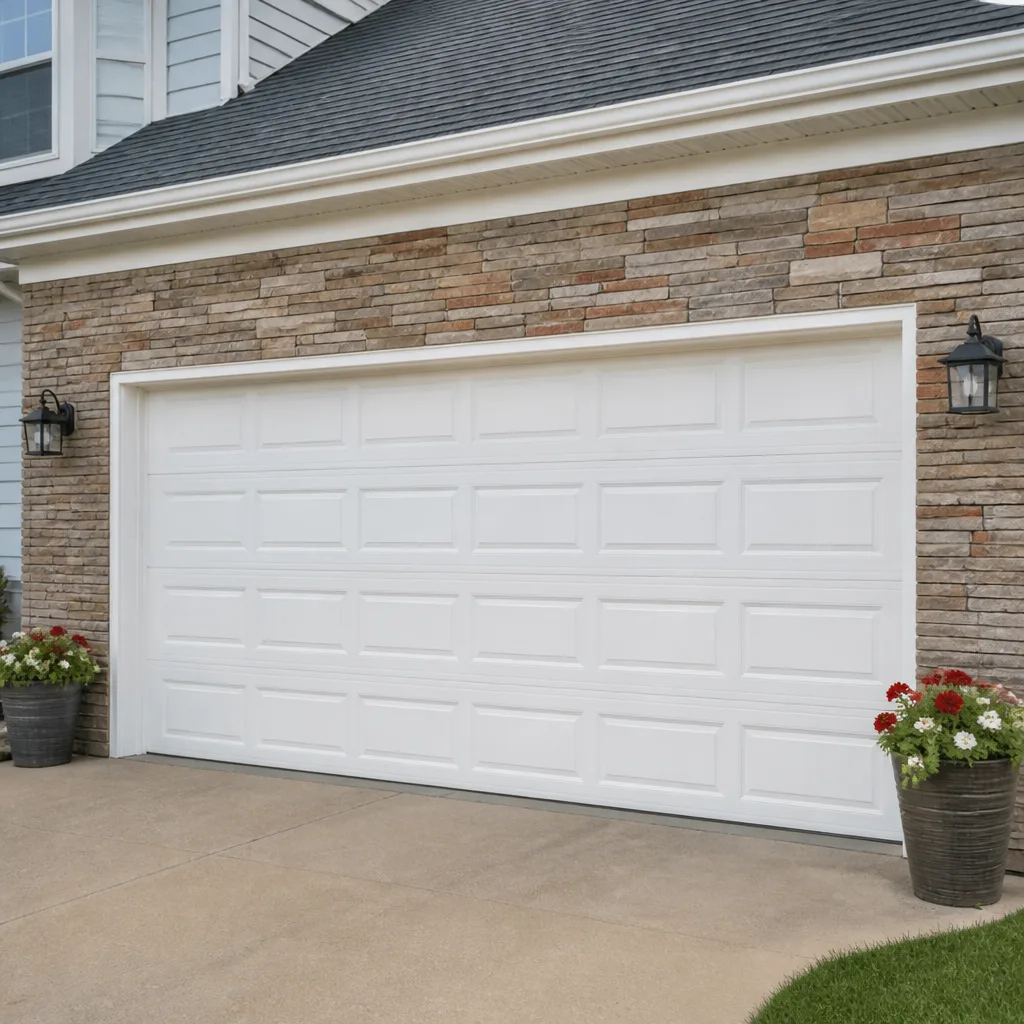 Raised-panel steel
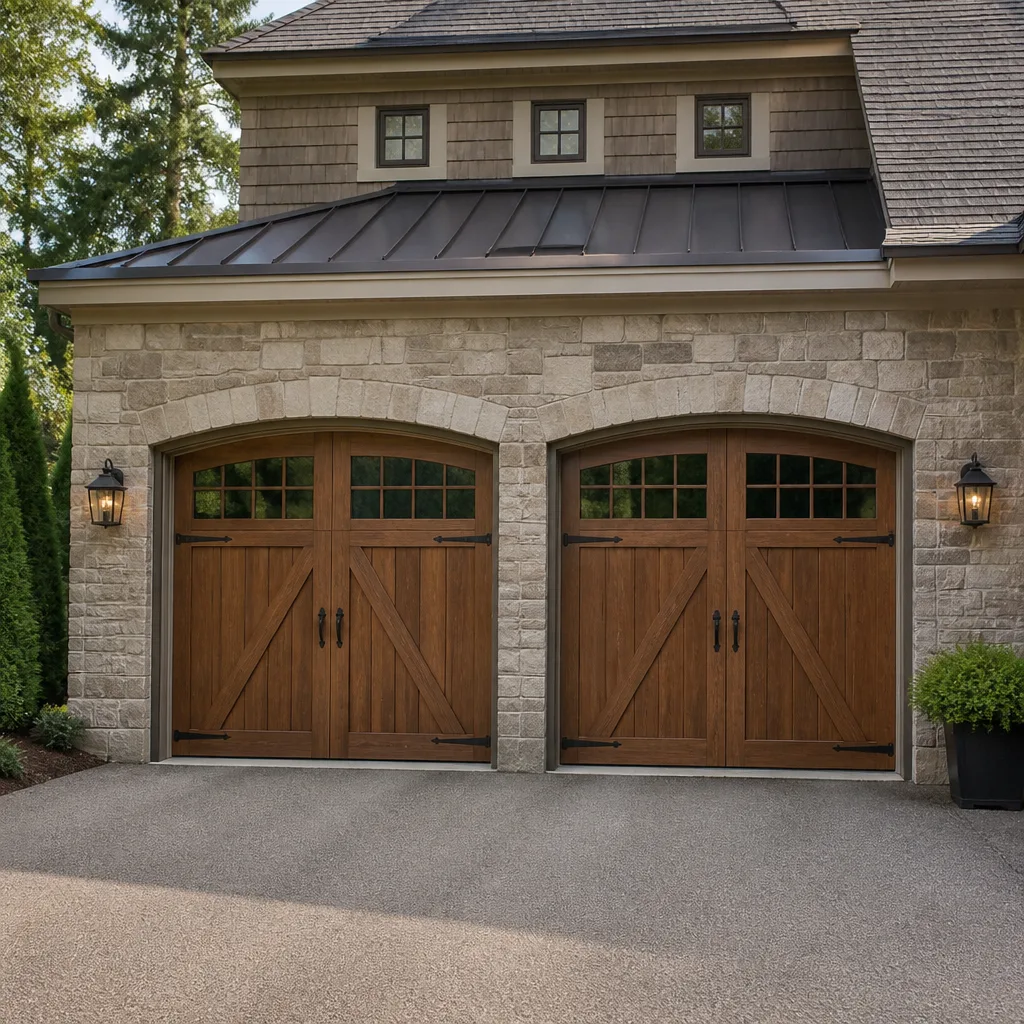 Carriage house
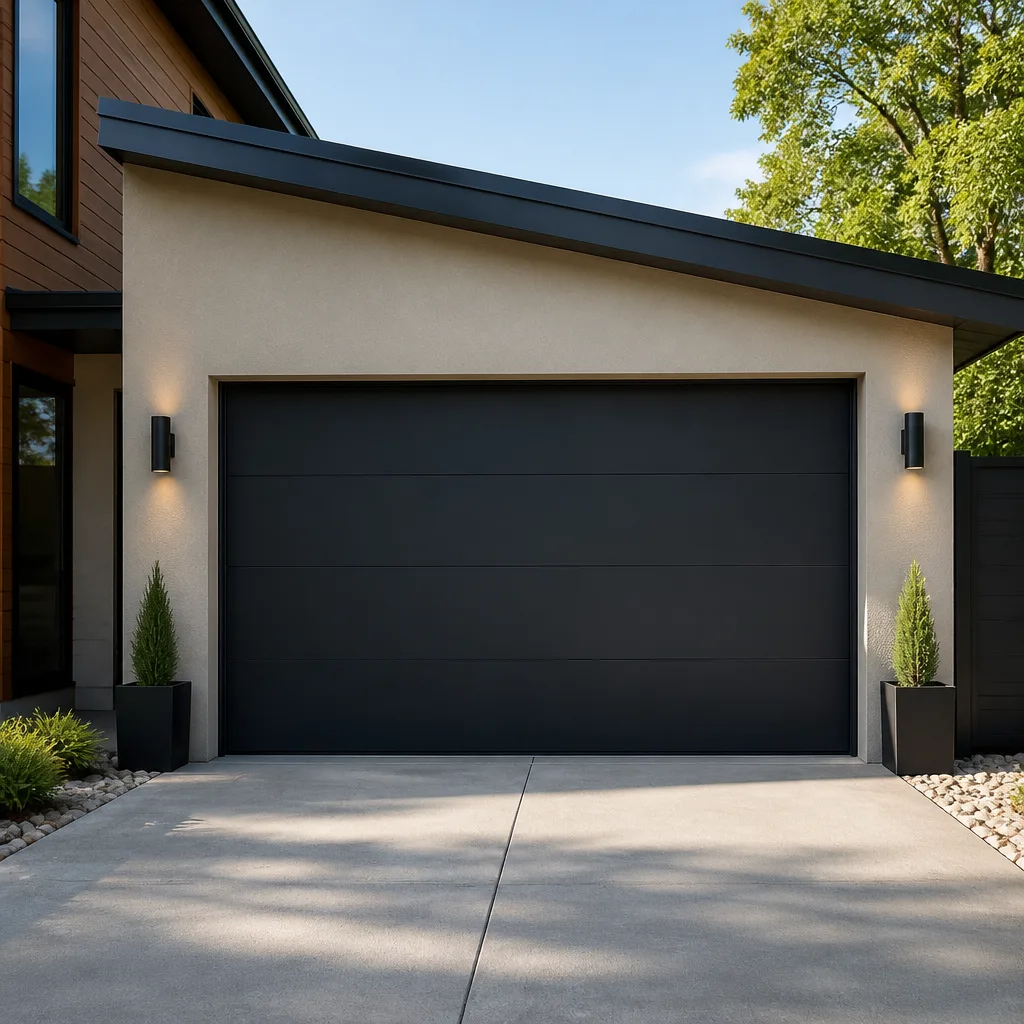 Modern flush
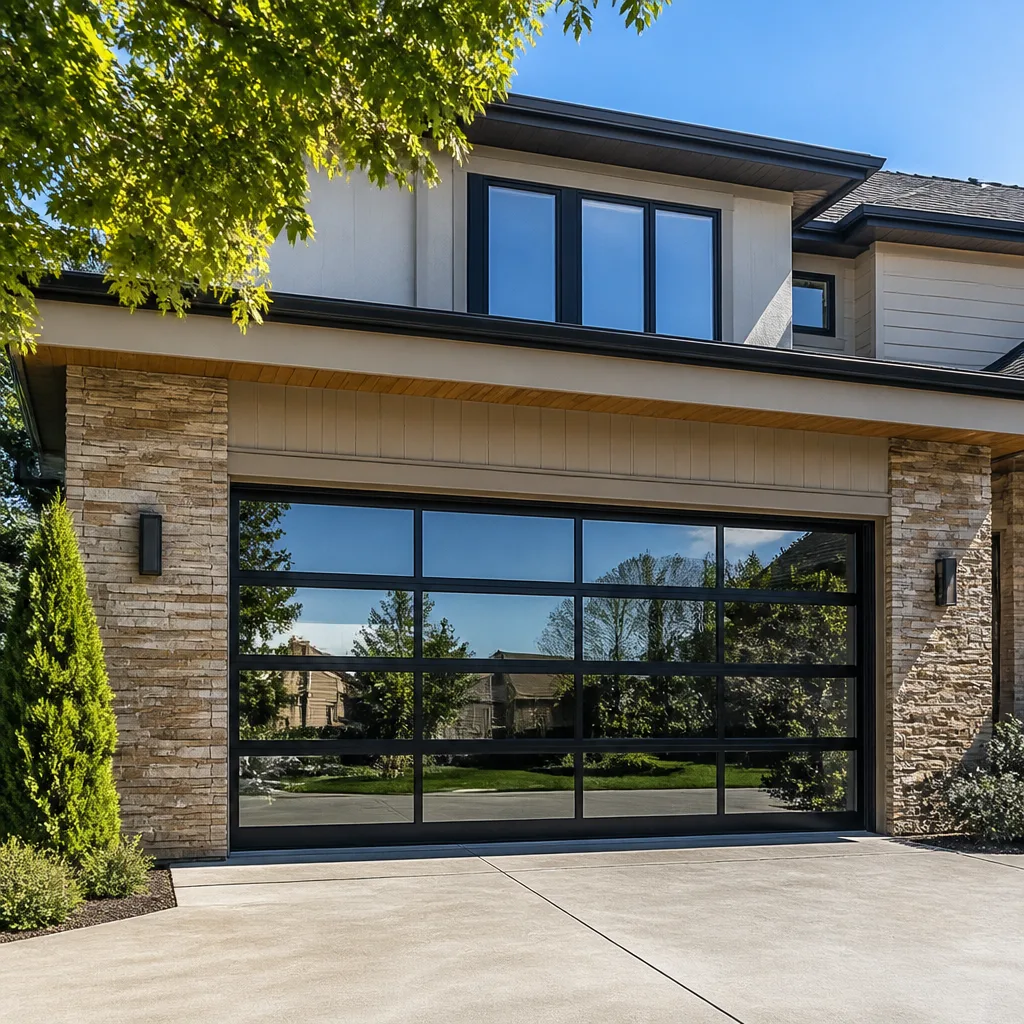 Full-view glass
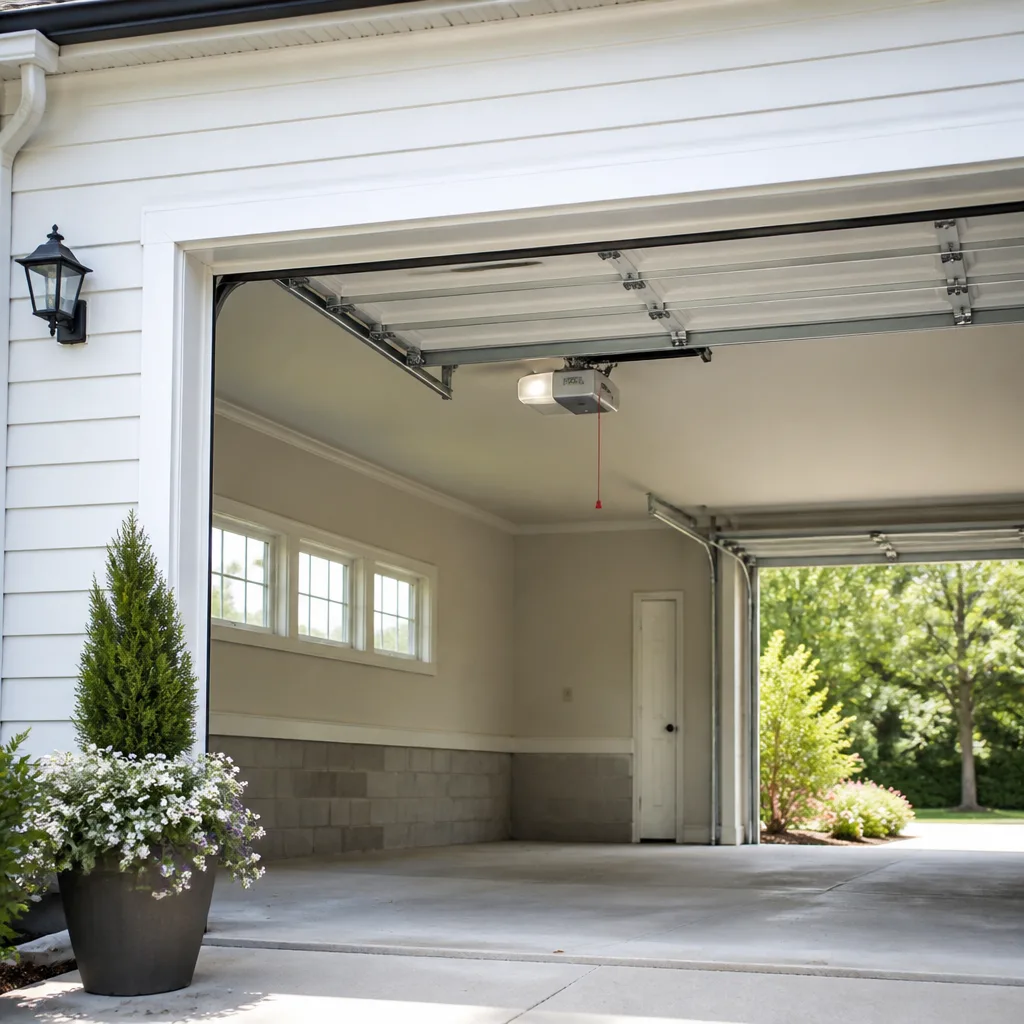 LiftMaster openers
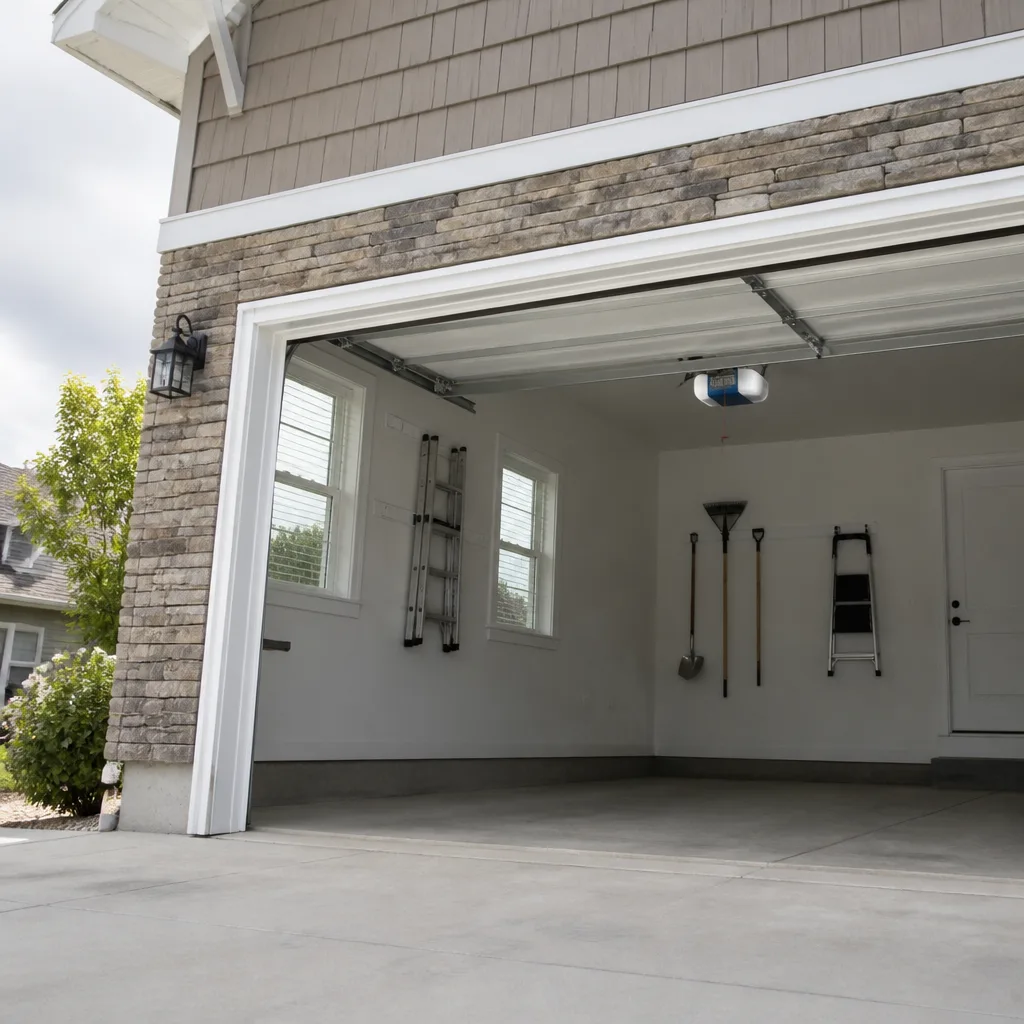 Chamberlain openers
Full 25-point door and opener safety check with every visit - springs, cables, rollers, tracks, and your LiftMaster or Chamberlain opener included
You get a price before we start. It does not change when the pro arrives.
Get your free estimateThe Complete Guide to Garage Doors in Winston-Salem
Most Winston-Salem homeowners choose a new garage door on looks alone, then call a technician a few months later when the opener they kept can’t lift the door they bought. The door, the springs, the tracks, and the opener are one system, and replacing any one piece without accounting for the others is where problems start. This guide covers how the system fits together, how Winston-Salem’s humid Piedmont summers and mixed housing stock shape what works here, which brands you’ll find already installed in local neighborhoods, and when a cosmetic change forces a safety upgrade. If you’re deciding between repair and replacement, you’ll leave with a clearer path either way.
Quick Answer
A garage door in Winston-Salem should be chosen as a complete system: panels, springs, tracks, weatherseal, and opener spec’d together for the door’s weight and your home’s construction. Older homes in Ardmore and similar neighborhoods often have non-standard door heights that require custom sizing, and the region’s humid summers favor steel or composite over wood. When in doubt, have the whole assembly evaluated before you buy.
Styles & brands we work with
- Raised-panel steel
- Carriage house
- Modern flush
- Full-view glass
- LiftMaster openers
- Chamberlain openers
Table of Contents
- Why a Garage Door Is a System, Not a Product
- How Piedmont Humidity Changes What Door You Should Buy
- Door Heights and Housing Stock: What Fits Winston-Salem Homes
- Brands Already on Winston-Salem Homes and What That Means for Parts
- Matching Your Opener to Your Door
- When a Cosmetic Upgrade Triggers a Safety Upgrade
- Repair or Replace? A Decision Framework
- How a New Door Installation Actually Goes
Why a Garage Door Is a System, Not a Product
A sectional garage door looks like a single object from the driveway. In practice it’s a set of components that all depend on each other. Change one and you change the load on the rest. This is the single most misunderstood part of the trade, and it’s why a door that “looks fine” can chew through openers.
Here’s what has to be spec’d together:
- Panels set the door’s weight and its balance point. Steel, composite, wood, and insulated versus non-insulated panels all weigh differently, and the springs are sized to that number.
- Springs counterbalance the door so a person could (in theory) lift it by hand. A spring sized for a 130-pound door will fail early on a 200-pound door.
- Tracks and rollers guide the door and absorb vibration. A heavier door puts more stress on the track hardware and the hinges.
- The opener is a motor with a rated lifting capacity. It’s not designed to lift the door’s full weight; it’s designed to lift a balanced door with a small assist.
- Weatherseal and bottom seal keep out drafts, moisture, and pests, and they take the most wear of any part on the door.
When a homeowner upgrades to a heavier insulated door but keeps a ten-year-old opener, the opener is now working harder than it was designed to. It may lift the door for a while, then start straining, reversing, or burning out the motor. That’s not an opener defect. It’s a system mismatch. When we diagnose a door in Winston-Salem, we look at the whole assembly rather than the failing part in isolation, because the failing part is often the messenger.
If you’re already dealing with a door that won’t open or close reliably, start with garage door repair and get the balance checked before replacing anything.
How Piedmont Humidity Changes What Door You Should Buy
Winston-Salem sits in the humid Piedmont, and that shapes material choices in ways a national buying guide won’t tell you. The region gets hot, muggy summers with plenty of moisture in the air. That’s not the same as a coastal climate (there’s no salt air here to corrode hardware), but it’s harder on certain materials than a dry climate would be.
Here’s the practical breakdown:
- Steel is the most common choice here, and for good reason. Modern steel doors are factory-finished with a baked-on coating that holds up well, and steel doesn’t absorb moisture. The failure point is the bottom edge and the bottom seal, where water sits. Keep the bottom seal in good shape and steel lasts a long time.
- Composite is gaining ground. It won’t rot, warp, or absorb moisture the way wood does, and it holds paint better through humid summers. If you want the look of wood without the maintenance, composite is the safer bet in this climate.
- Wood is the material most affected by Piedmont humidity. Real wood expands in the summer and contracts in the winter, which can cause panels to swell, stick, or finish to peel. Wood doors need more frequent sealing and painting here than they would in a drier part of the country. If you love the look, budget for the upkeep.
The other climate factor is temperature swing. Winston-Salem gets cold winters and hot summers, and that cycle works on weatherseal, caulk lines, and the door’s finish. A door that’s sealed well in October may show gaps by July. When we service a door in Winston-Salem, checking the weatherseal and bottom seal is part of every call, not an upsell.
Door Heights and Housing Stock: What Fits Winston-Salem Homes
Winston-Salem’s housing stock runs from older bungalows in Ardmore and West End to newer subdivisions out toward Lewisville and Clemmons. That spread matters for one very practical reason: door openings aren’t uniform.
Pre-1990 homes, especially the older neighborhoods close to downtown, often have garage openings that don’t match today’s standard sizes. Standard heights today are commonly 7 feet, with 8-foot doors available for taller vehicles and newer construction. But older homes may have a 6-foot-6 or 6-foot-8 opening, or a width that isn’t the standard 8, 9, or 16 feet. This is the part of the process most homeowners don’t learn until the installer shows up with a door that won’t fit.
What that means for you:
- Measure the opening before you shop. Width, height, and the headroom above the door (the space between the top of the opening and the ceiling) all matter.
- Check the side clearance. The space on each side of the opening needs to accommodate the track. Older garages sometimes have very little room.
- Know your ceiling and backroom. The door needs room to travel back along the ceiling. A low ceiling may rule out certain opener types or require a different track configuration.
- If your opening is non-standard, expect a custom order. That adds lead time and usually cost. It also means getting the measurement right the first time.
If you’re in an older Winston-Salem neighborhood, don’t assume a big-box door will drop into the opening. Measure first, then confirm with a technician. The Winston-Salem housing mix is genuinely varied, and a door that’s a drop-in for a 2005 build in Lewisville may need custom sizing for a 1958 bungalow in Ardmore.
Brands Already on Winston-Salem Homes and What That Means for Parts
Walk any Winston-Salem subdivision and you’ll see the same handful of brands on doors and openers. On the door side, Clopay, Amarr, and Wayne Dalton are all common; Clopay and Amarr in particular are widely installed across the region. On the opener side, LiftMaster and Genie dominate, with Chamberlain and Craftsman also showing up frequently.
Why does that matter? Because parts availability is a real practical concern. A brand-agnostic technician who knows the common brands can usually source springs, rollers, cables, hinges, and opener parts without a long wait, and can tell you what’s interchangeable across models. A single-brand dealer will steer you toward what they stock, even when a different brand’s part is the better or more available fit.
At Crescent Garage Door Repair, we work on the brand you already have. Our technicians are factory-familiar with eight of the most widely installed brands in North America: LiftMaster, Chamberlain, Genie, Clopay, Amarr, Wayne Dalton, Craftsman, and Raynor. That covers the vast majority of doors and openers in use across Winston-Salem homes. Whether your opener is a LiftMaster or a Genie, or your door is a Clopay or a Wayne Dalton, the diagnosis starts with the problem, not with what we’d prefer to sell you. Our technicians have up to experience across these systems.
If your opener is the part that’s failing, garage door opener repair is treated as its own service, because opener diagnosis is genuinely different from door diagnosis. The motor, the drive mechanism, the safety sensors, and the wall control all have their own failure modes.
Matching Your Opener to Your Door
This is where the misconception from the opening comes back. The opener is the most failure-prone component on the system, and it’s the one most often mismatched to the door.
What to check before you replace an opener or a door:
- Lift capacity. Most residential openers are rated for a certain door weight. A heavier insulated door may exceed that. Check the door’s weight against the opener’s rating.
- Horsepower isn’t everything. A 1/2-horsepower opener on a well-balanced door can be fine. A 3/4-horsepower unit on an unbalanced door won’t fix the problem. Balance comes first.
- Drive type. Belt, chain, screw, and jackshaft drives have different noise, maintenance, and headroom requirements. A low-ceiling garage may need a jackshaft opener or a different track setup.
- Safety features. The auto-reverse mechanism and the photo-eye sensors are non-negotiable safety components. An older opener without them is a real risk, especially in a home with children or pets.
If your door is balanced and your opener is straining, the opener may simply be undersized or worn. If your door is out of balance and your opener is straining, replacing the opener alone won’t solve it. That’s why we look at both together.
If you’re not sure where to start, a Crescent Garage Door Repair technician can check the balance and the opener together and tell you which one is actually causing the problem.
When a Cosmetic Upgrade Triggers a Safety Upgrade
A common surprise: you replace the door for looks, and the technician tells you something in the safety system has to change too. That’s not an upsell. It’s often a requirement.
Modern garage doors are required to have certain safety features depending on local code, and replacing a door can trigger the need to bring the safety system up to current standards. The most common examples are the auto-reverse mechanism and the photo-eye sensors on the opener. An older opener that was installed before these were standard may not have them, or may have a version that no longer meets current requirements. If your door is being replaced, the opener and its safety features often need to be evaluated at the same time.
We don’t give specific code citations here, because building codes change and the exact requirements depend on your municipality and the specifics of the job. The right move is to ask your city’s building department directly, or have the technician confirm what’s required for your address before work starts. If you’re planning a replacement, ask about safety requirements before you buy the door, not after. It’s the difference between a planned cost and a surprise.
Repair or Replace? A Decision Framework
Homeowners ask this constantly, and there’s no single answer. The honest framework depends on the age, the damage, and the cost balance. Here’s how we think about it:
- One broken part on an otherwise solid door: repair. A single spring, a set of rollers, a cable, or a bent track on a door that’s structurally sound is usually a repair job. The cost of a repair is far below a replacement, and the door keeps its remaining life.
- A snapped spring: repair, not replace. Springs are wear items. They’re designed to be replaced. A snapped spring doesn’t mean the door is done. It means it’s time for new springs. If one spring snapped on a two-spring door, the matched pair is usually replaced together, because the second spring has the same wear and is likely to fail soon after. That matters for cost: a spring price is for one spring, so a matched pair runs about twice that.
- Multiple panels dented or rusted through: replacement may make sense. If the damage is cosmetic but widespread, or if rust has compromised the structure, a new door is often the more sensible investment.
- Door is out of balance and the opener is straining: diagnose first. This can be a repair or a replacement depending on what’s actually wrong. Don’t guess.
- Door is very old and parts are hard to find: replacement becomes practical. If the door is a model whose parts are no longer made, you may be looking at a patch that won’t last. In that case, a replacement with a current model makes more sense.
One more thing: the door’s weight and the opener’s capacity should be re-checked whenever you decide to keep an old door and replace the opener, or keep an old opener and replace the door. Mismatches are the most common cause of premature failure, and they’re avoidable.
How a New Door Installation Actually Goes
A new door isn’t a same-day impulse purchase. It’s measured, ordered, and scheduled. Here’s how a typical installation goes, so you know what to expect.
- Measure and assess. A technician measures the opening, the headroom, the side clearance, and the backroom. This is where older Winston-Salem homes get flagged for custom sizing.
- Recommend door and opener together. The door’s weight is matched to the springs, and the opener is matched to the door. This is the system-spec step that prevents the mismatch problem later.
- Written estimate. You get a written estimate that sets the final price before any work begins. Nothing starts until you agree to it.
- Order the door. Standard sizes ship faster; custom sizes take longer. You’ll know the expected timeline up front.
- Installation day. Tracks, panels, springs, and hardware go in, followed by the opener and its safety features if you’re replacing it. The technician tests the balance, the travel, and the safety sensors before leaving.
- Walkthrough. You get a run-through of the operation, the safety features, and any maintenance that will keep the door working longer.
We handle repair, opener service, and installation under one company, so you’re not coordinating multiple contractors for a single project. From the opener motor to the bottom seal, the whole system is our responsibility. If you’re planning a replacement, call for a free measure and a written price.
Common Mistakes to Avoid
- Buying a door based on looks without checking the opener. The new door may be heavier than the old one, and the opener may not be rated for it. Check both before you buy.
- Skipping the measurement on an older home. Non-standard openings in older Winston-Salem neighborhoods are common. Measure first; a door that doesn’t fit is an expensive mistake.
- Replacing one spring when the pair is the same age. The second spring is usually close to failing too. A matched pair is the standard replacement, and it costs about twice a single spring.
- Assuming a wood door will hold up the same here as in a dry climate. Piedmont humidity is hard on wood. Budget for more frequent sealing and painting if you choose it.
- Ignoring safety features on an older opener. Auto-reverse and photo-eye sensors are not optional. An older opener without them is a genuine risk, and a door replacement may require bringing them up to current standards.
- Using the opener to judge the door’s health. A straining opener is often telling you the door is out of balance, not that the opener is bad. Diagnose before you replace.
- Calling a single-brand dealer for a different brand. You’ll get steered toward what they stock. A brand-agnostic technician diagnoses the problem first.
See the difference
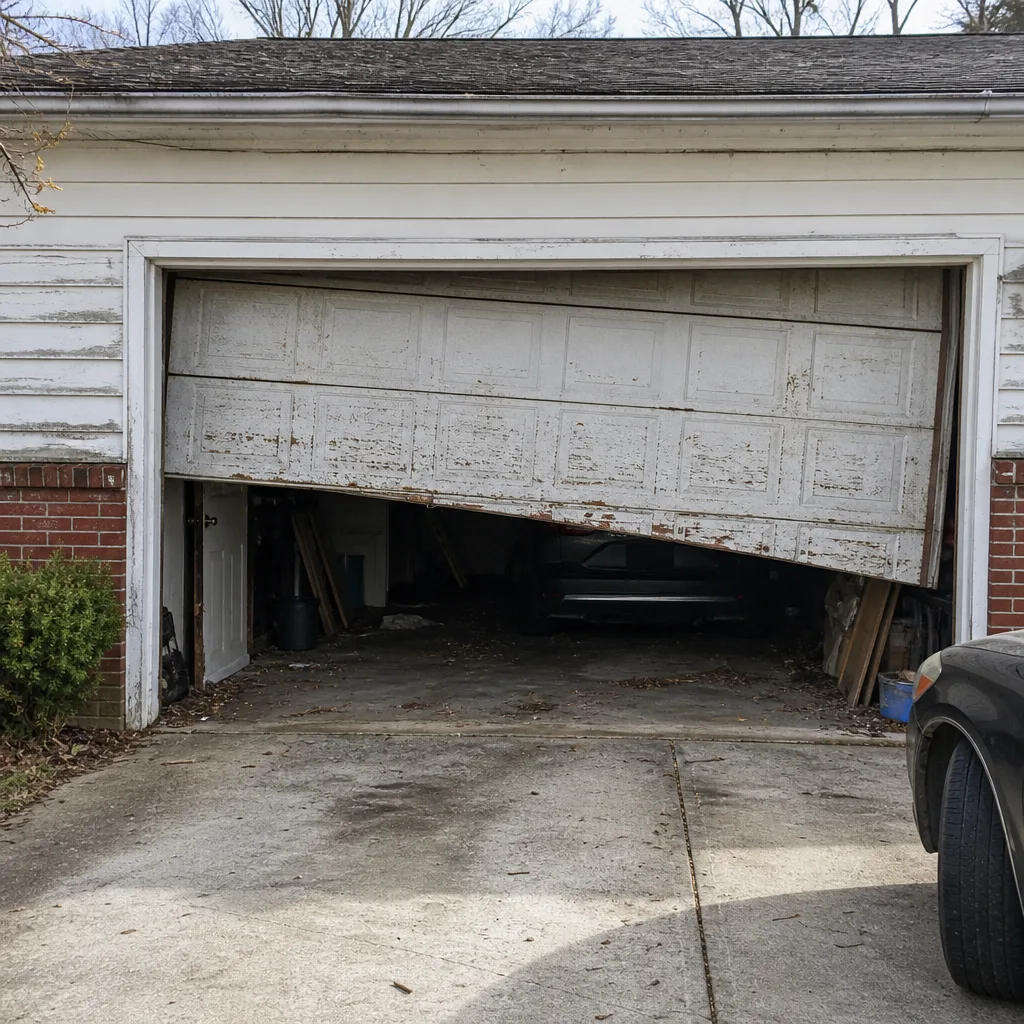 Before
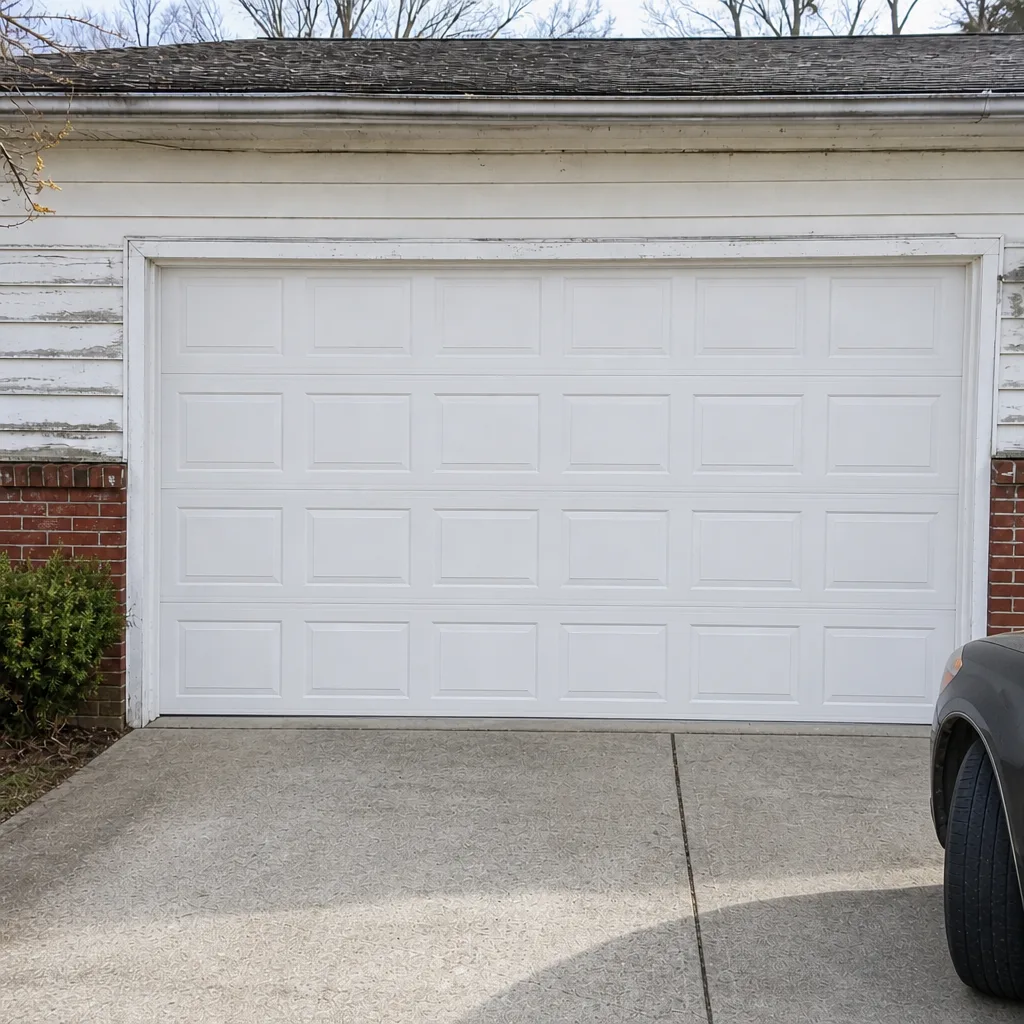 After
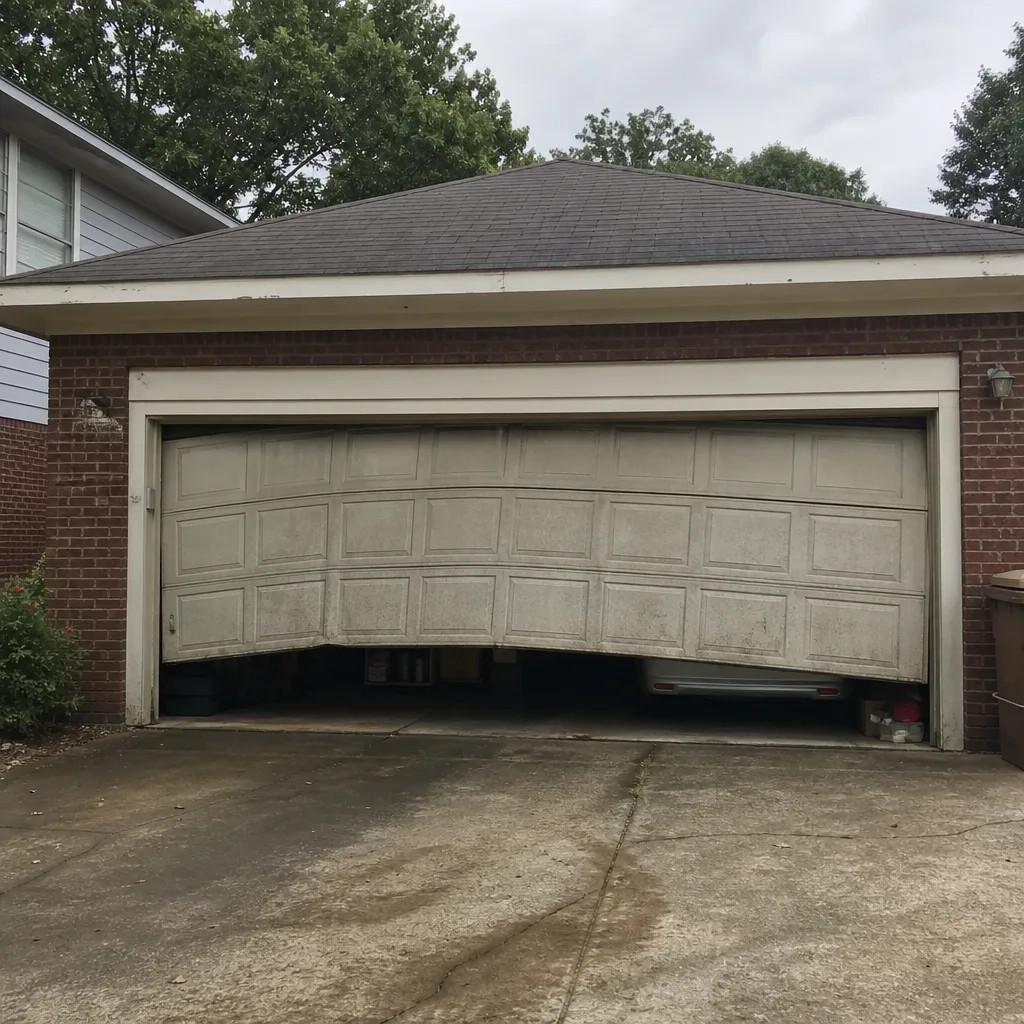 Before
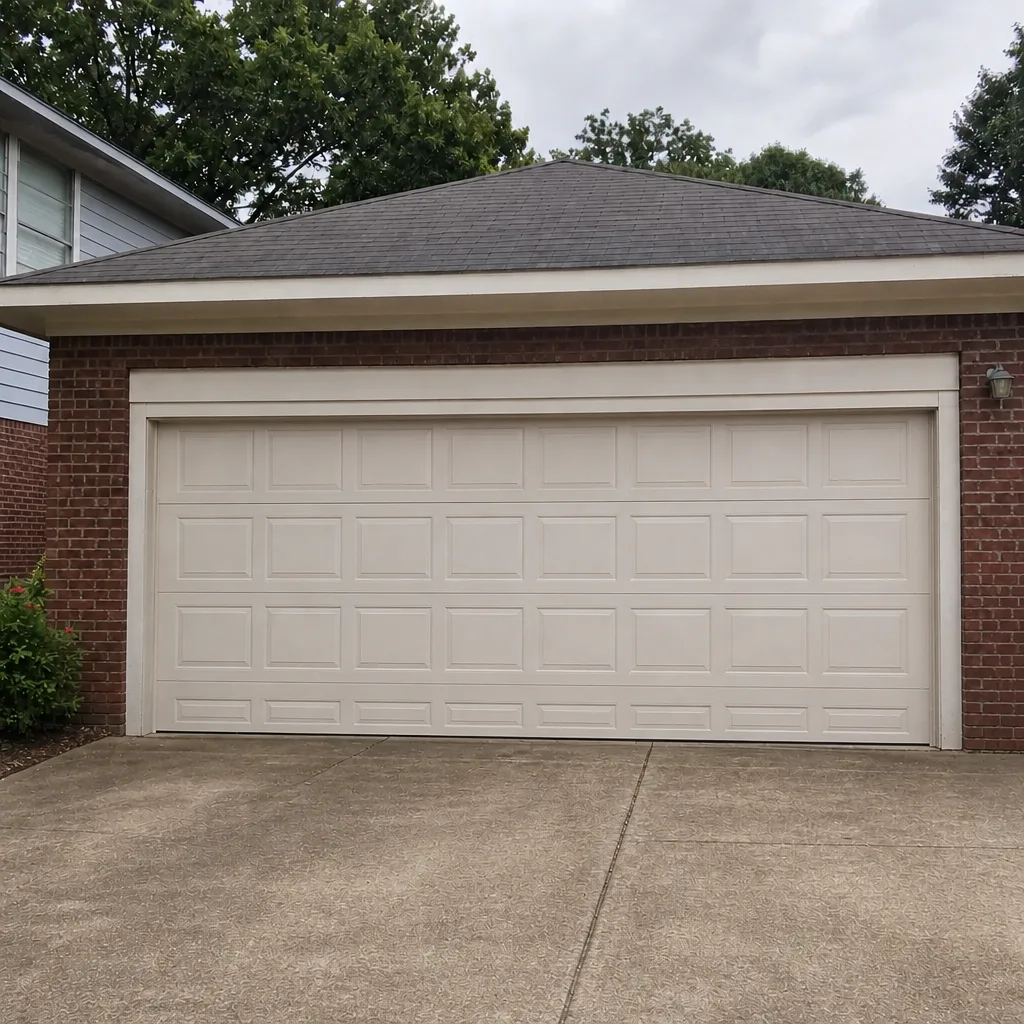 After
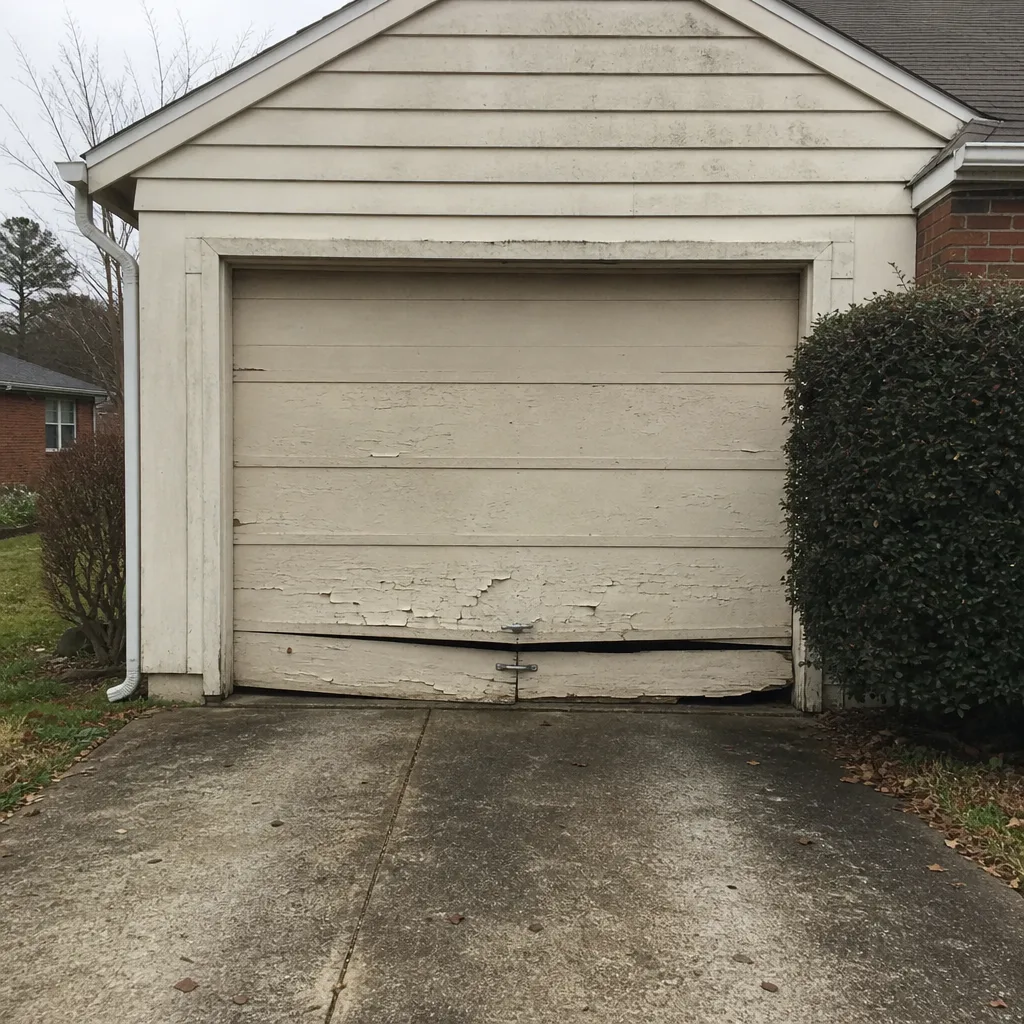 Before
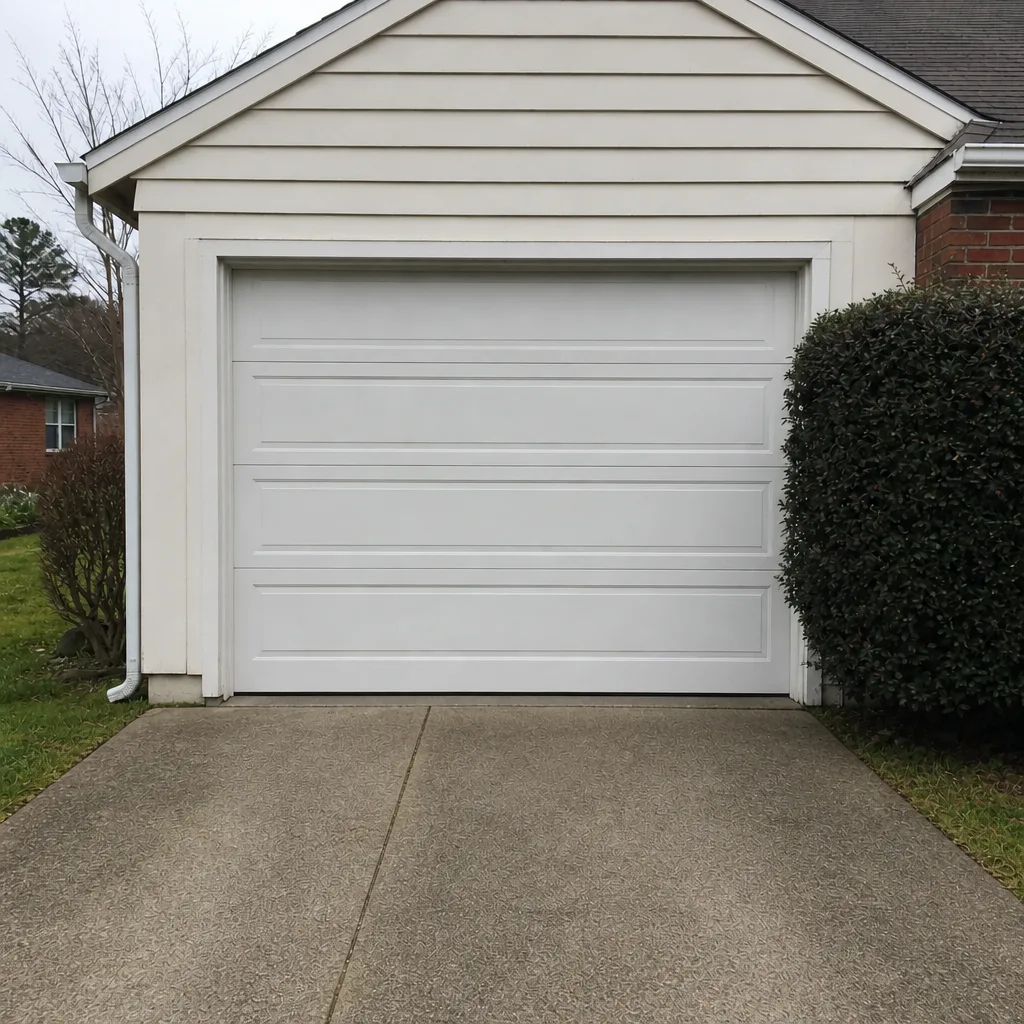 After
When to Call a Professional
Some things are worth checking yourself, and some aren’t. Anything involving springs under tension, cables, or the electrical components of the opener is in the second category. A garage door spring under tension is genuinely dangerous, and the components can cause serious injury if they fail while someone is working on them. A trained technician has the tools, the technique, and the safety knowledge to handle it correctly. The same goes for opener wiring and any electrical work.
Call a professional if your door won’t open or close, if the opener is straining or reversing, if you hear a loud snap from the spring, if the door is visibly out of balance, or if you’re planning a replacement and want the whole system evaluated before you buy. Crescent Garage Door Repair offers free estimates in Winston-Salem, and our technicians are knowledgeable across the major brands. Call (877) 692-2814. We answer 24/7. Fast dispatch from 7am to 7pm, Sunday through Friday.
Frequently Asked Questions
It depends on what’s wrong. A single broken spring, a set of rollers, or a cable repair each carry a different cost, and one spring’s price is for one spring; a matched pair runs about twice that. The estimate is free and the written price sets the final cost before any work starts. Call (877) 692-2814 for an exact quote.
For repair and opener issues, same-day service is often possible, and fast dispatch runs from 7am to 7pm. A new door installation is measured and scheduled rather than same-day. Call (877) 692-2814. We answer 24/7.
No. The written estimate sets the price, and it’s agreed before any work starts. If the technician finds something different than expected, you’ll hear about it before work continues, not after. Call (877) 692-2814 for a free estimate.
Yes. Our technicians are experienced across the major brands, and we work with the brand already on your home. We can work with your insurer if a claim is involved. Call (877) 692-2814 to talk through your situation.
On doors, Clopay, Amarr, and Wayne Dalton are common; on openers, LiftMaster and Genie dominate, with Chamberlain and Craftsman also frequent. Our technicians are familiar with all of them, so parts availability and diagnosis aren’t limited to one brand.
Many municipalities require a permit for a garage door replacement, and safety requirements can apply when a door is replaced. Requirements vary, so ask your city’s building department directly before work starts. Call (877) 692-2814 if you want help preparing the measurement information for the permit.
The Bottom Line
A garage door is a system, and the parts that fail are often telling you about a mismatch elsewhere. Choose your door, springs, tracks, and opener together, and match the opener to the door’s actual weight. In Winston-Salem, the humid Piedmont climate favors steel and composite over wood, and older neighborhoods like Ardmore and West End may need custom sizing for non-standard openings. Brand familiarity matters for parts availability, and so does a technician who works on the brand you already have. If you’re planning a replacement, get the whole system evaluated, get a written price, and ask about safety requirements before you buy.
Call (877) 692-2814 for a free estimate on garage door repair, opener repair, or new installation in Winston-Salem. We answer 24/7. Fast dispatch from 7am to 7pm, Sunday through Friday. Our team at Crescent Garage Door Repair is ready to help you get the whole door working right.
Written by the team at Crescent Garage Door Repair.