
Last updated November 16, 2026
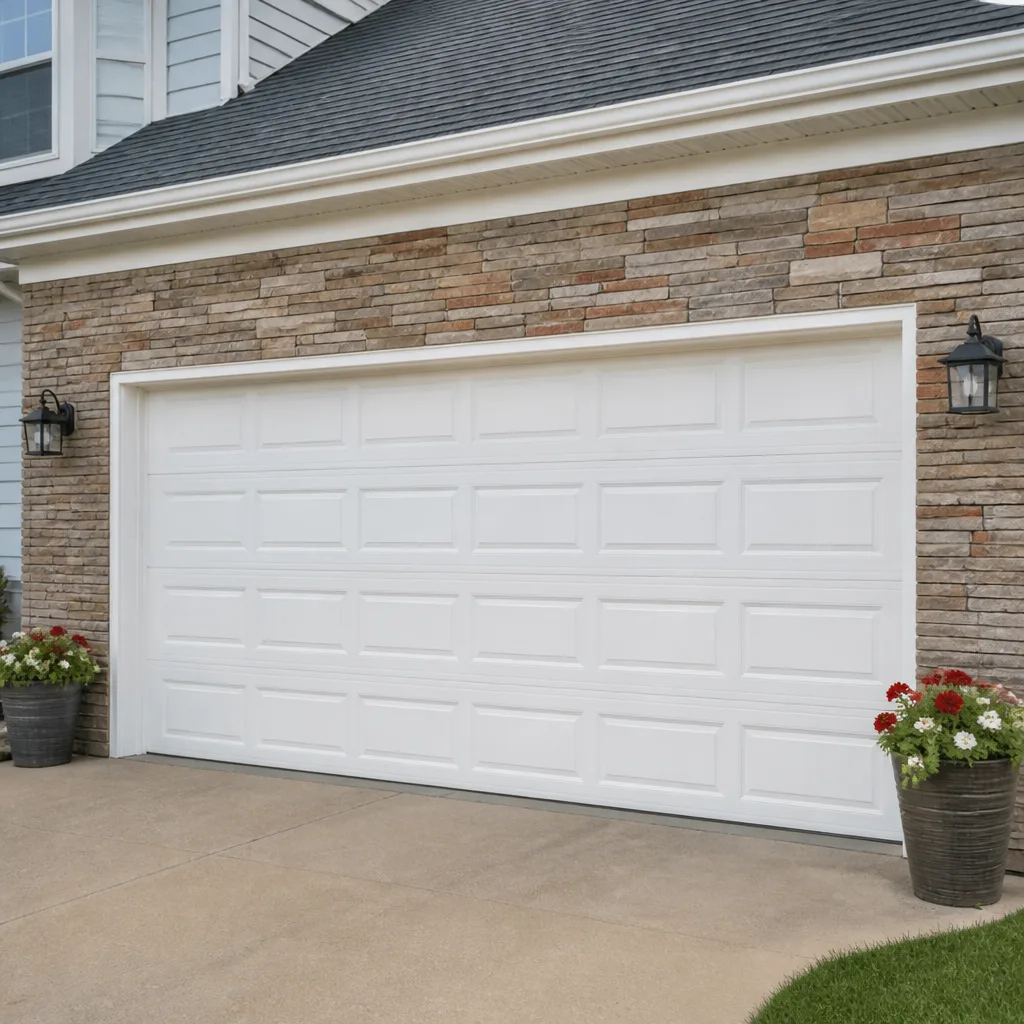 Raised-panel steel
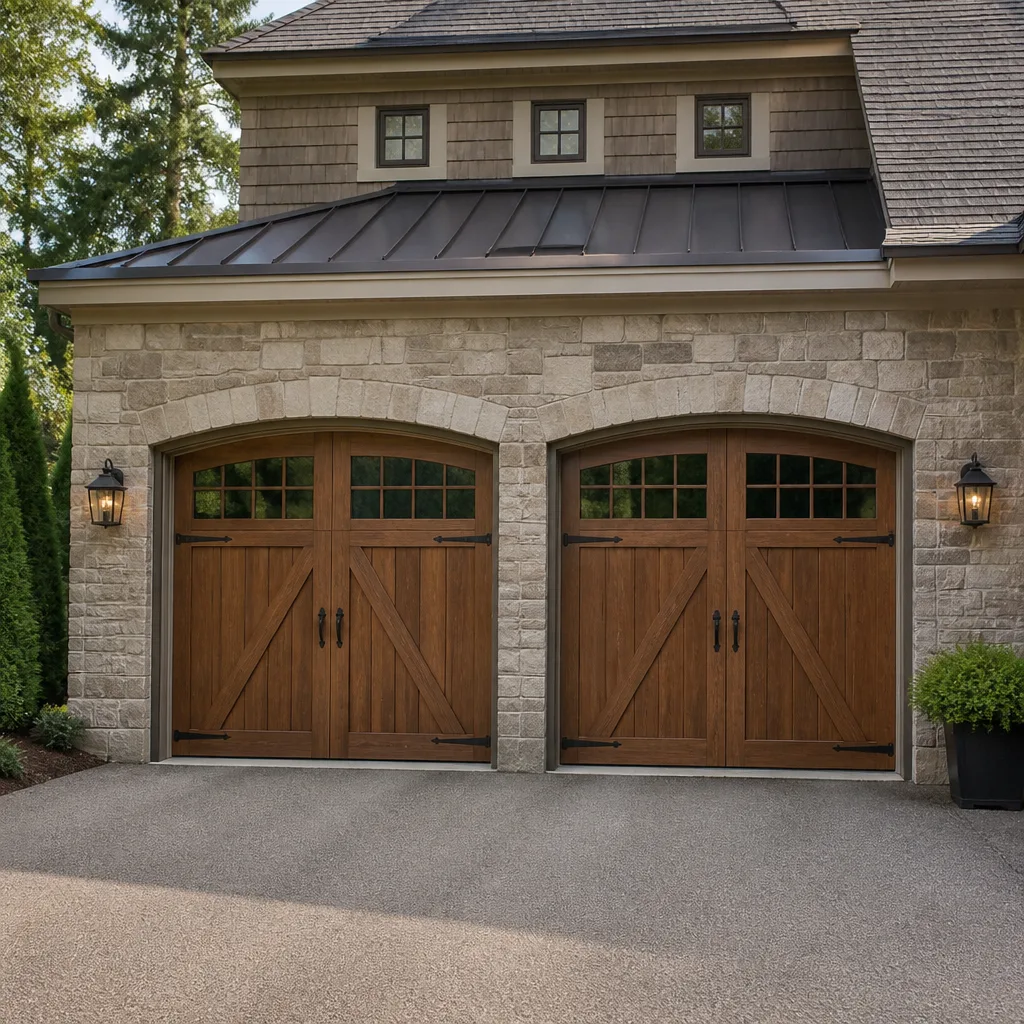 Carriage house
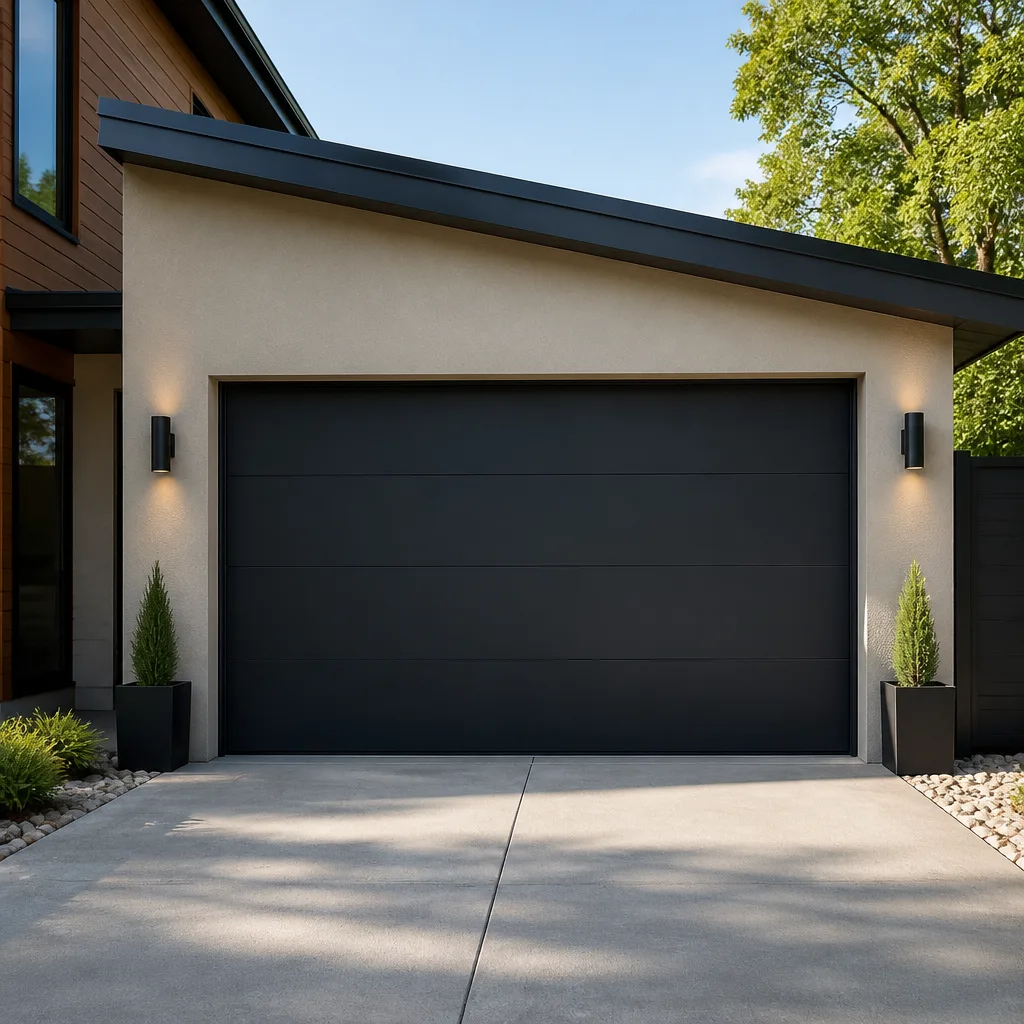 Modern flush
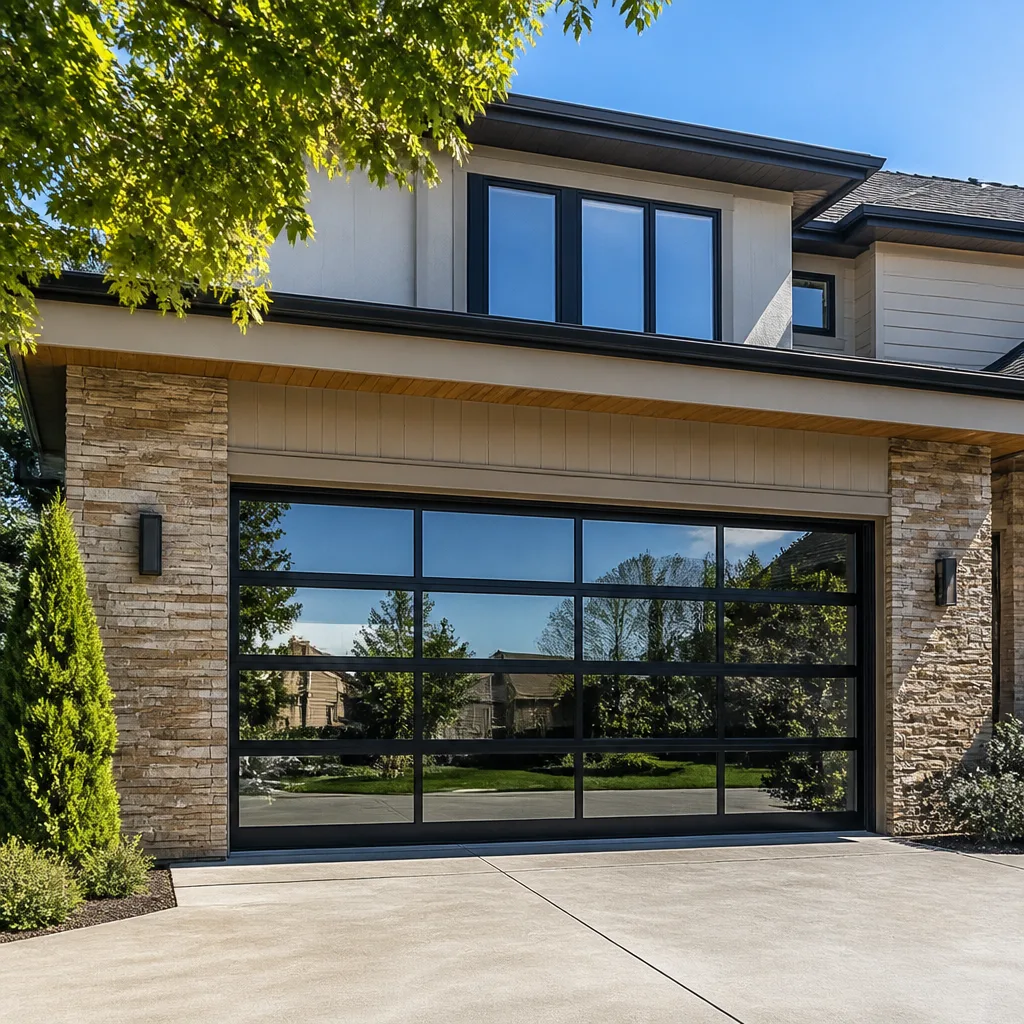 Full-view glass
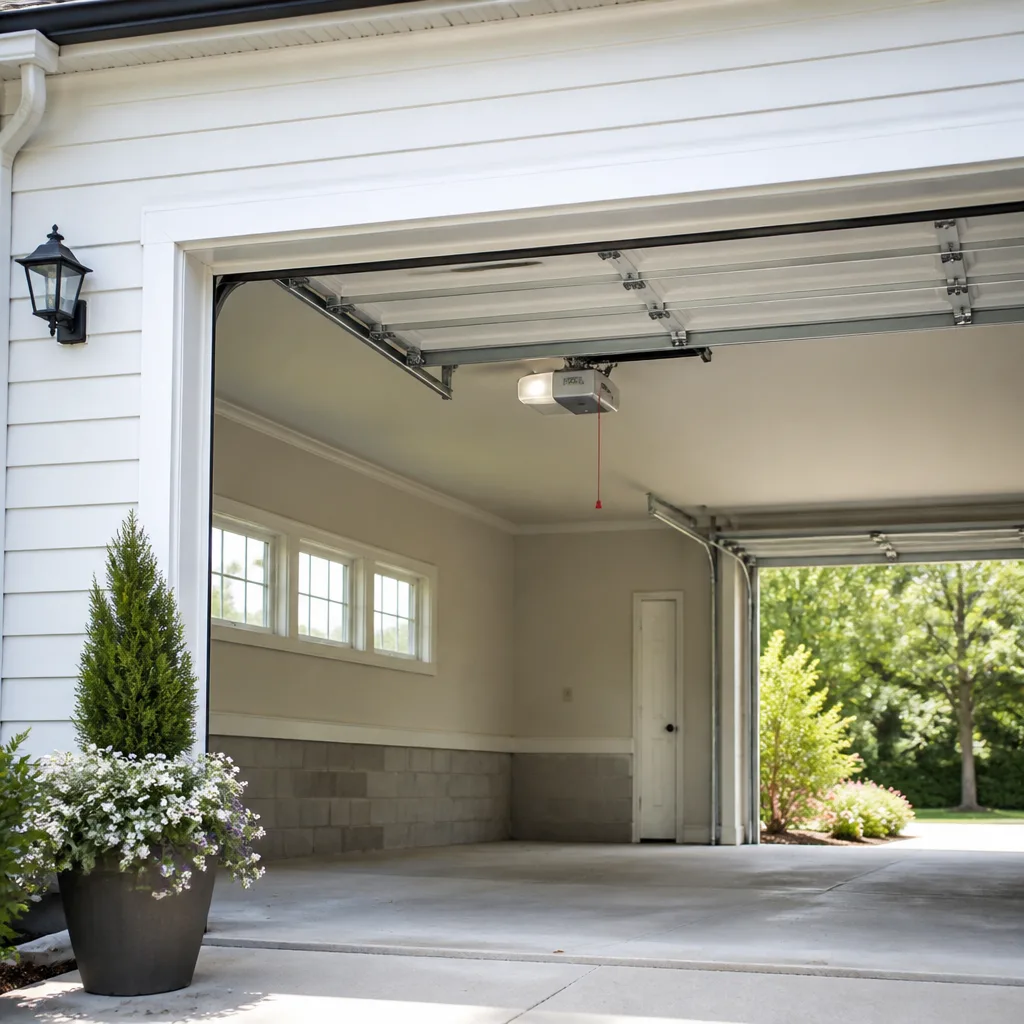 LiftMaster openers
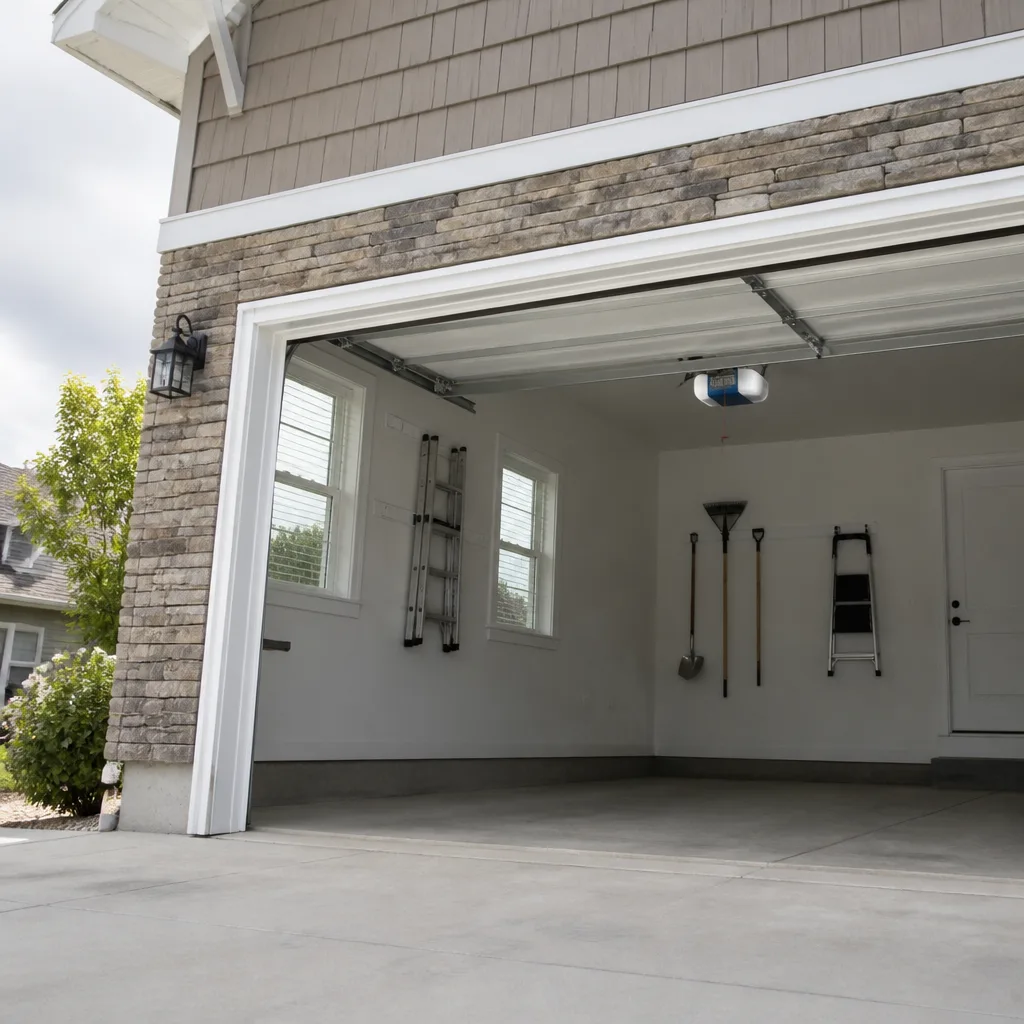 Chamberlain openers
Full 25-point door and opener safety check with every visit - springs, cables, rollers, tracks, and your LiftMaster or Chamberlain opener included
You get a price before we start. It does not change when the pro arrives.
Get your free estimateSeasonal Garage Door Care for Winston-Salem: Year-Round Homeowner’s Guide
Most garage door advice assumes one problem: cold. That’s a mistake here. Winston-Salem runs through genuinely different weather every few months, and each stretch of the calendar attacks a different part of your door system. Pollen loads up the photo-eyes in April. Humidity works on spring coils through July and August. Ice storms arrive with almost no warning, and cable failures cluster in the first cold snap. A single checkup a year leaves three-quarters of those problems to surface as a breakdown. This guide walks through what each season does to your door in Winston-Salem, what to look at and when, and how to catch the failure-prone conditions early enough to avoid a stranded car.
Quick Answer
Seasonal garage door care in Winston-Salem means four checks a year, each timed to a real local weather shift: clean and dry the door in spring to clear pollen from the photo-eye lenses and track channels, lubricate springs and hinges before summer humidity sets in, test the bottom seal and weatherstripping before the first freeze, and re-check opener force settings and balance in January when cold makes the door stiffer. A 15-minute walk-around at each of those points catches most of the conditions that lead to a snapped cable, a stuck door, or an opener that quits.
Styles & brands we work with
- Raised-panel steel
- Carriage house
- Modern flush
- Full-view glass
- LiftMaster openers
- Chamberlain openers
Table of Contents
- Why seasonal care matters more in Winston-Salem than a single annual tune-up
- Spring: pollen, photo-eyes, and the mess that builds up in April
- Summer: heat, humidity, and rust on torsion spring coils
- Fall: weatherseal, leaf debris, and the first cold snap
- Winter: ice, opener sensitivity, and the 48-hour failure window
- The 15-minute seasonal walk-around
- Brand notes: LiftMaster, Chamberlain, Wayne Dalton, and what to know
- Common mistakes to avoid
Why seasonal care matters more in Winston-Salem than a single annual tune-up
Winston-Salem sits in a part of North Carolina where the weather swings from summer heat to hard winter cold without much transition. That gap is the problem. A door that gets one inspection in, say, October has already run through a humid summer and a pollen season untouched. By the time anyone looks at the springs, the steel coils may have already started to pit.
Most of what fails on a garage door in Winston-Salem fails on a schedule you can predict:
- Pollen season (roughly March through May) coats photo-eye lenses, gunks up the tracks, and works its way into hinges and rollers.
- Humid summer heat (temperatures regularly in the high 80s and 90s) speeds rust on torsion spring coils and swells wooden door frames and trim.
- Fall temperature swings dry out and stiffen the bottom seal, which is exactly when it cracks.
- Winter cold snaps stiffen the grease in rollers and hinges, make the springs stiffer, and put more strain on cables.
When we work on a door in Winston-Salem, the pattern is usually clear. A spring that snapped in January shows rust that started in July. A door that won’t close in April usually has a photo-eye full of pollen, not a dead opener. Treating each season as its own problem to solve means you’re addressing the cause rather than the symptom.
Our technicians have up to experience and have seen all of it. When a door fails and you need it fixed, we handle garage door repair as a core service, but we’d rather you find the issue before it strands the car. Here’s how the year breaks down in Winston-Salem.
Spring: pollen, photo-eyes, and the mess that builds up in April
Spring in Winston-Salem is the season most garage door guides skip, and that’s a mistake. Pollen here is heavy. It settles on everything in the garage, and it gets into all the places it shouldn’t.
The photo-eye sensors are the first casualty. They’re the two small sensors mounted near the floor at each side of the door. When pollen builds up on the lenses, the beam gets interrupted and the door refuses to close, or reverses in the middle of travel. A homeowner calls this in as “the opener quit” more often than any other spring problem. It’s not the opener. It’s grit on the sensor.
What spring care looks like in practice:
- Wipe the photo-eye lenses with a soft dry cloth. Two of them, one at each track, at about knee height. Do it once after the pollen peak and again after the first heavy rain.
- Blow out the track channels. Pollen, grit, and leaf fragments collect in the vertical tracks. Loose debris causes the rollers to chatter and drag.
- Check the hinges and rollers for grit. The garage is not a sealed room, and everything that blows under the door ends up in the pivot points.
- Look for green or white fuzz on the spring coils. A little surface discoloration in April becomes a serious pitting problem by August if it’s not addressed.
Budding trees, oak pollen, and pine dust are the main sources. If your garage faces trees, spring is a heavier maintenance season for you than for most. If the door is dragging or the opener is reversing unexpectedly, those sensors are where to look first.
If you can’t find the issue, or the door won’t respond to the sensors, that’s a good point to call. We offer garage door opener repair as a dedicated service, because a lot of what looks like a door problem turns out to be an opener or sensor diagnosis. Our technicians have up to experience with sensor alignment, opener boards, and safety-reverse calibration.
Summer: heat, humidity, and rust on torsion spring coils
The summer problem in Winston-Salem isn’t the heat itself; it’s what the humidity does to bare steel. Torsion springs are the coiled steel bars mounted on the wall above the door. They’re under constant tension, and they’re the part most likely to fail if they rust. Summer is when that rust starts, quietly.
Once rust pits the surface of a spring coil, the coil loses steel thickness, and a coil that started rated for the door’s weight starts to weaken. The result is a spring that eventually snaps, and the snap is a lot more expensive to fix than a little grease would have been.
What to do before June:
- Apply a garage door lubricant to the torsion spring coils. Not WD-40. A proper door lube (typically a white lithium or silicone garage door lubricant) clings to the coil and displaces moisture.
- Lubricate the hinges, rollers, and the opener rail. Heat thins out old grease; a light coat keeps things moving.
- Look at the paint or coating on the door panels. Sun on a south- or west-facing door fades and dries the finish. A coat of exterior paint or door-specific finish every few years keeps it from cracking.
- Watch the wooden door frame. Frames that get wet from rain run-off swell in summer heat and bind the door.
If you have a wooden door, summer is also when warping shows up. Wooden doors that were hung tight in the winter sometimes rub on the frame in July and August. That drag shows up as a door that stutters at the top or bottom of travel, and it’s a sign to check the door balance.
Rust is slow and invisible until it isn’t. What you’re doing in summer is buying the spring decades rather than seasons. That matters more than most homeowners realize, because a torsion spring failure isn’t a cushioned failure. It’s a sudden release of stored energy, and a snapped spring is a professional repair, not a homeowner project. Call (877) 692-2814 if you have a rusted or visibly pitted spring. We answer 24/7. Fast dispatch from 7am to 7pm, Sunday through Friday.
Fall: weatherseal, leaf debris, and the first cold snap
Fall in Winston-Salem is short. The weather shifts from warm afternoons to genuine cold within weeks, and the bottom seal is what feels it first. That black strip along the bottom of the door is what keeps out water, wind, and insects. It’s also one of the most neglected parts of a garage door.
When the temperature drops into the 30s and 40s for the first time, a weatherseal that’s already dry and cracked will split open. The result is water getting under the door during the first rain, and cold air pouring in all winter.
What to check in fall:
- The bottom seal. Run your hand along the bottom edge of the door. It should feel soft, not stiff or cracked. Look for splits along the fold and any spots where the seal has pulled away from the door panel.
- The side and top weatherstripping. The stripping along the door frame goes brittle too. Look for curling or gaps when the door is closed.
- Leaf and gutter debris. Leaves collect against the door and get into the tracks. Wet leaves hold moisture against the bottom seal and the door tracks, and that moisture is what does the damage.
- The door balance. Disconnect the opener (the release handle is the manual pull-cord) and lift the door by hand to about halfway. A balanced door stays where you leave it. One that drops quickly or takes real effort to lift needs an adjustment.
The specific weatherseal profile matters. The bottom seal on most doors is a T-style or U-style weatherstrip, and it needs to be the right size for the door. A seal that’s too thick or too thin won’t keep water out, and it may bind against the door.
A cracked weatherseal isn’t an emergency, but a wet garage floor and a cold winter are. If you don’t want to handle the seal yourself, we replace weatherseals and door hardware, and we offer free estimates in Winston-Salem. That way you know the price before we start.
Winter: ice, opener sensitivity, and the 48-hour failure window
Winter in Winston-Salem isn’t consistently cold. It’s unpredictably cold. Ice storms here aren’t rare, and the temperature swinging below 20°F is exactly the kind of stress most garage door systems aren’t tuned for.
Most cable snaps happen in the 48 hours after a hard freeze. That’s not a coincidence. The cold stiffens the grease in the rollers and hinges, and the door becomes harder to open. The springs lose some of their give. The opener motor pulls harder than it’s used to, and the cables take the extra load. When a cable is already slightly worn, the extra load is what breaks it.
Winter prep matters, and it starts with the opener:
- Re-check the opener’s force setting. The opener has an adjustable force setting (most modern openers adjust this during setup, and many have an automatic force-adjust feature). In cold weather, the door feels heavier to the opener, and the opener pulls harder to compensate.
- Test the safety reverse. Put a 2×4 flat on the floor under the door. When the door closes on it, the door should reverse. If it doesn’t, the safety reverse is out of adjustment. That’s a safety issue, not a convenience one.
- Test the photo-eyes again. Cold weather can cause the photo-eye lenses to fog or frost over.
- Keep the ice off the door tracks. A door track with ice in it will pull a roller out of alignment or damage the hinge.
- Watch the cables. A cable that’s already frayed or has broken strands is a candidate for a snap. This is a safety issue. Do not adjust cables yourself. A cable under tension is under enormous force.
If your door uses a LiftMaster or Chamberlain opener with an automatic force-adjust feature, the opener is already doing part of this work for you. But that doesn’t replace the manual test. When the temperature swings fast, the automatic adjustment can’t keep up.
We work on LiftMaster, Chamberlain, Genie, Clopay, Amarr, Wayne Dalton, Craftsman, and Raynor systems. When a door or opener fails in January, we can usually diagnose and repair it the same day. Call (877) 692-2814. We answer 24/7, and we provide fast dispatch from 7am to 7pm, Sunday through Friday.
The 15-minute seasonal walk-around
The most useful maintenance habit doesn’t require tools, time, or a professional. It’s a walk-around you can do once per season, and it catches the conditions that precede most failures.
- Look at the door from across the driveway. Does the door sit straight? Does it look level with the frame? A door that’s out of level suggests a spring or cable problem.
- Watch the door open and close. Listen for grinding, popping, or scraping. A door that stutters at the top, the bottom, or mid-travel has a problem.
- Wipe the photo-eye lenses. Two small lenses at the bottom of the tracks. Pollen, frost, dust, and spider webs can block the beam.
- Run your hand along the bottom seal. Check for splits, curling, and gaps.
- Pull the manual release and lift the door by hand to halfway. A balanced door stays where you leave it. One that drops or feels heavy needs adjustment.
- Look at the spring coils. Any rust? Any visible pitting or dark spots?
- Check the cables. Dangling strands, kinks, or fraying at the ends are warning signs. Don’t adjust them yourself. Keep hands clear.
- Test the safety reverse. Put a 2×4 under the door and see if the door reverses when it meets it.
That’s the whole walk-around. Fifteen minutes total, and it catches about 80% of the conditions that lead to a stranded car. What it won’t catch: a torsion spring that’s just at the end of its life, a bearing that’s worn internally, a circuit board that’s about to fail. Those are what our technicians check. But if the walk-around is clean, the odds of a failure are much lower.
Do it in April, July, October, and January. That cycle lines up with the four weather shifts in Winston-Salem.
Brand notes: LiftMaster, Chamberlain, Wayne Dalton, and what to know
Most door systems in Winston-Salem are one of the major brands. Knowing what you have helps you spot the issues that are specific to it.
LiftMaster and Chamberlain are the two most common openers. Both brands use the same core technology (they’re owned by the same parent company), and both have auto-force adjustment in modern models. That means the opener adjusts its force to the door’s weight without you doing anything. If the opener reverses unexpectedly in cold weather, the auto-force feature may already be at its limit. That’s a clue the door is out of balance or the spring is weak.
Wayne Dalton and Raynor doors are common on homes in this area. Wayne Dalton doors use proprietary hardware for their tracks and springs, and parts may not be interchangeable with other brands. If you call a generalist who only stocks one brand, they may not have the part. When you call us, we work with the brand you already have.
Craftsman openers are common in older garages. The opener heads on older Craftsman units may not be repairable if the board fails, but the good news is that most Craftsman door hardware is compatible with standard replacements.
What matters less than the brand is the diagnosis. A door that’s out of balance, a spring that’s weak, or a photo-eye that’s misaligned produces the same symptoms regardless of brand. We diagnose the problem, not the product. If you’ve been told by another company that the whole door needs replacing and you’re not sure, a second opinion is worth it.
Common Mistakes to Avoid
- Treating spring rust as cosmetic. A bit of orange on a spring coil means the steel is losing thickness. Left alone for a summer or two, it can snap.
- Using WD-40 on the springs. It’s a solvent, not a lubricant. It removes what little protection the spring had and attracts dirt.
- Ignoring the photo-eyes in April. A pollen-covered photo-eye is the most common cause of a “stuck door” in Winston-Salem in spring. It looks like a dead opener, but it isn’t.
- Skipping the opener force re-check in January. A force setting that was fine in October is too high or too low in the cold. The opener pulls harder and triggers a reverse or a stall.
- Patching a cracked bottom seal instead of replacing it. A patch won’t seal. The first hard rain puts water in the garage.
- Adjusting cables or springs yourself. Springs are under enormous tension. Cables are under tension too. This is a professional job, no exceptions.
- Letting a door run out of balance. A door that’s out of balance strains the opener. The opener then overworks itself to open and close, and that’s what wears it out.
See the difference
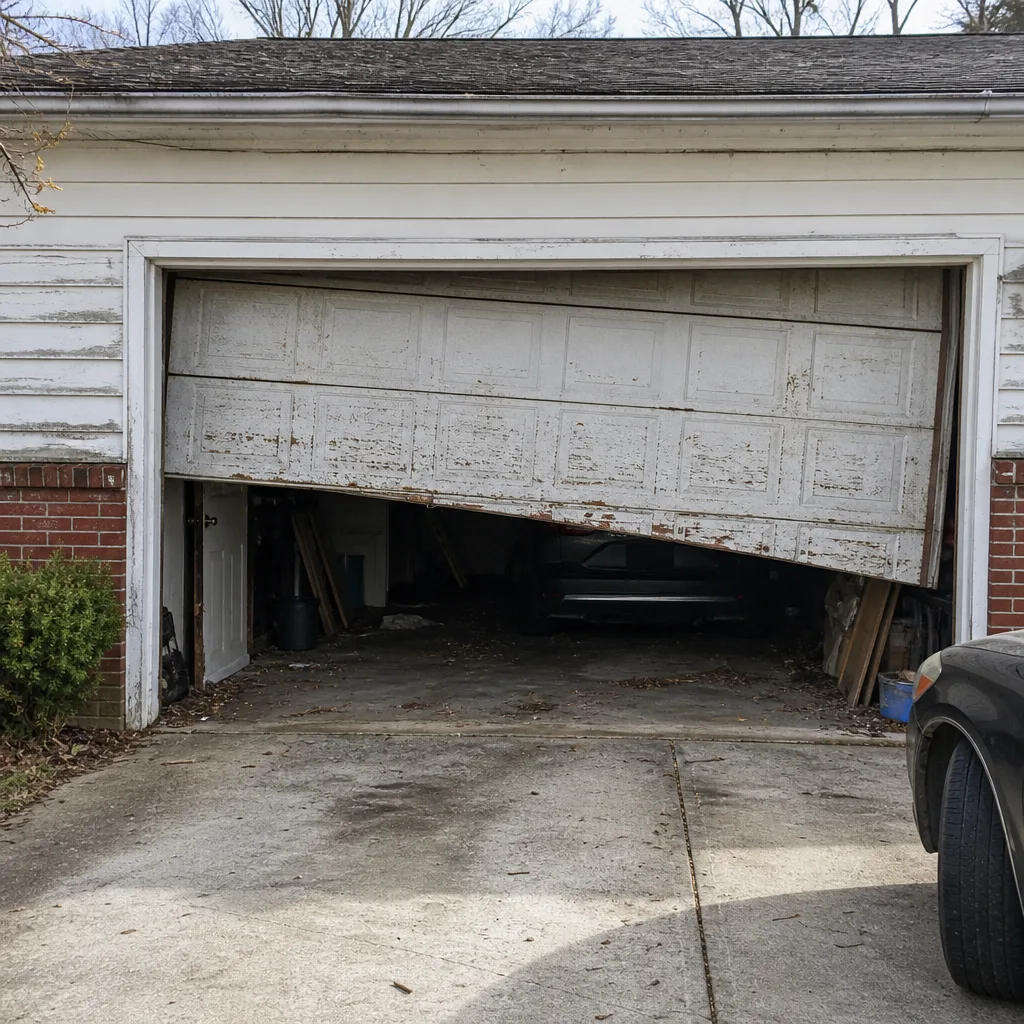 Before
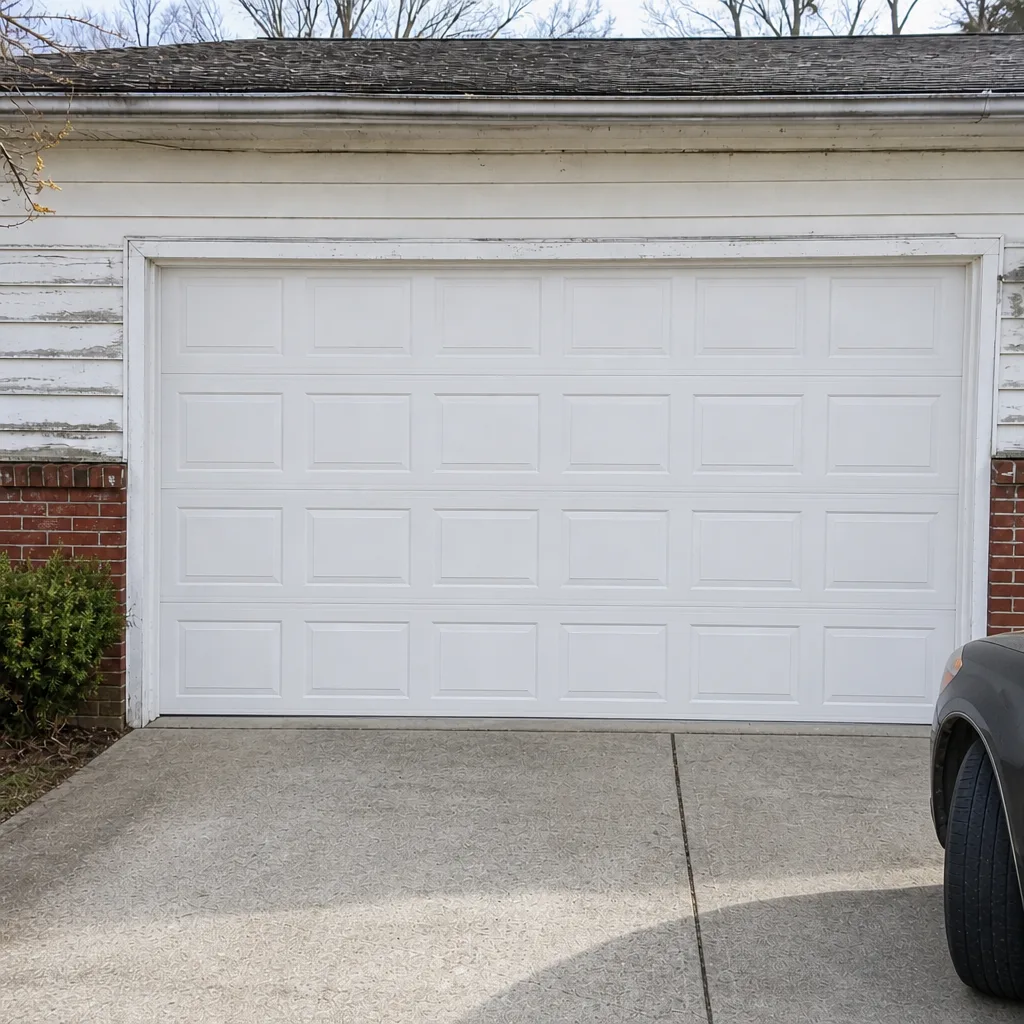 After
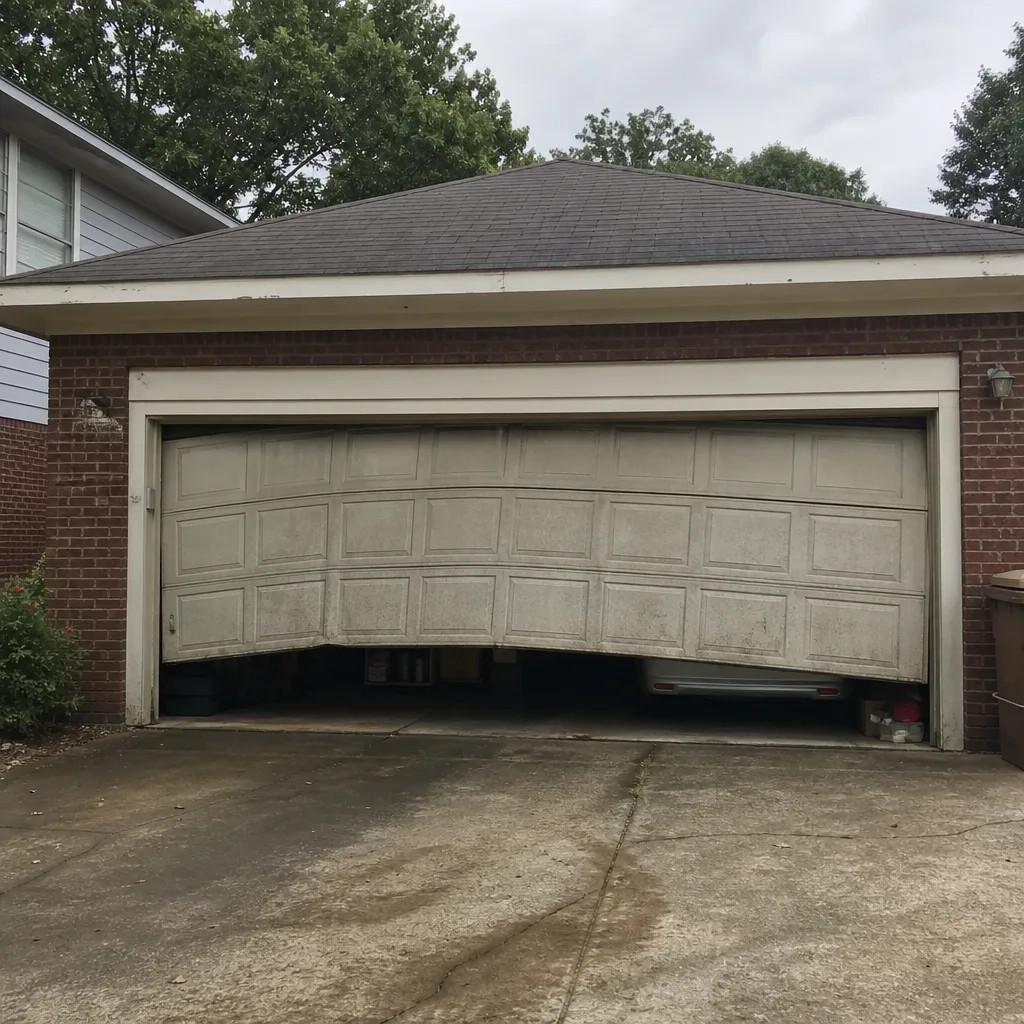 Before
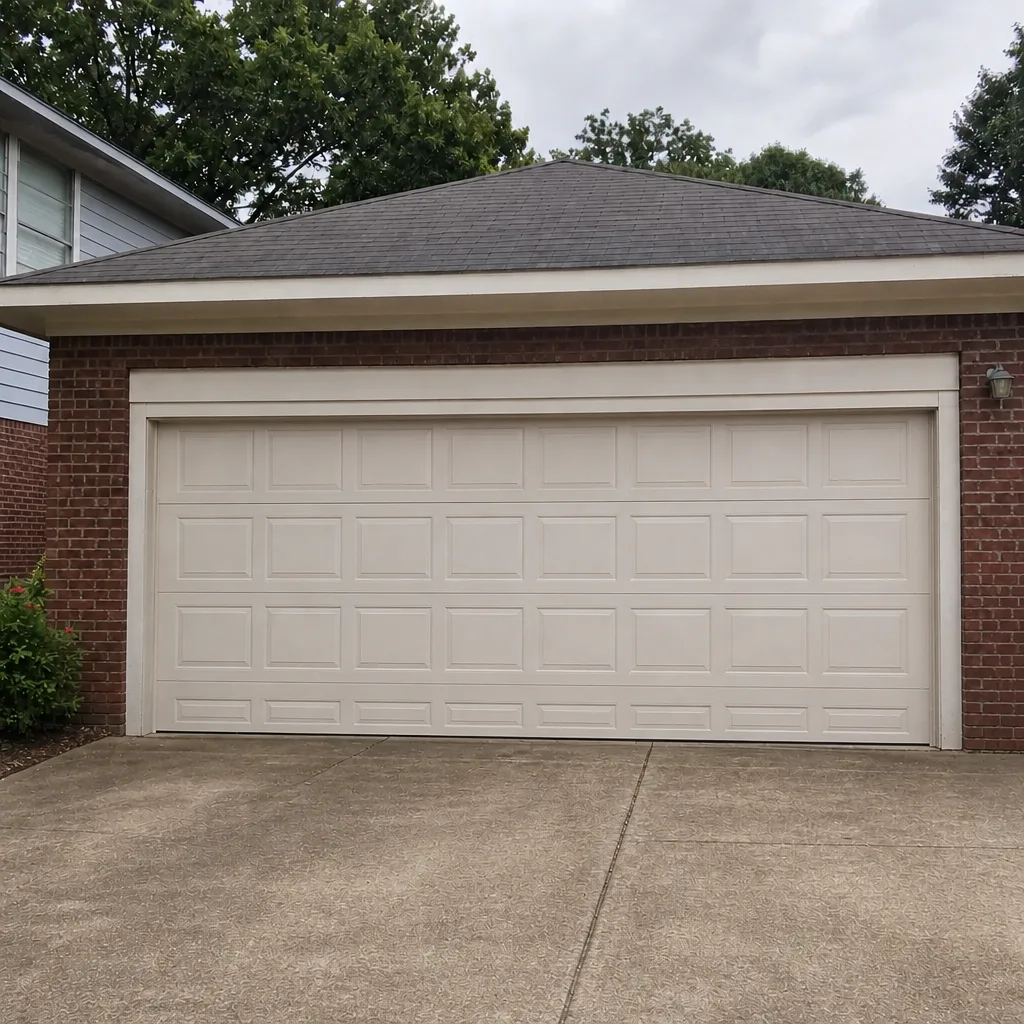 After
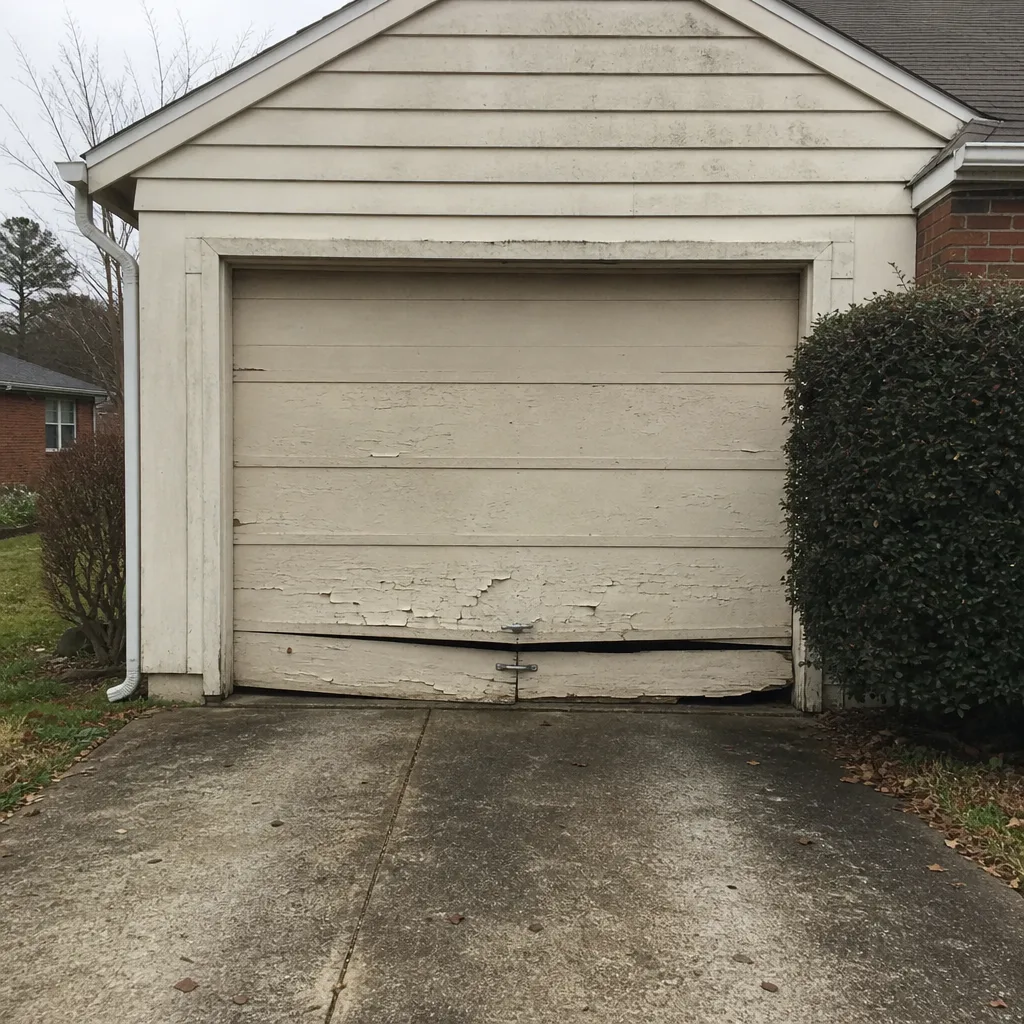 Before
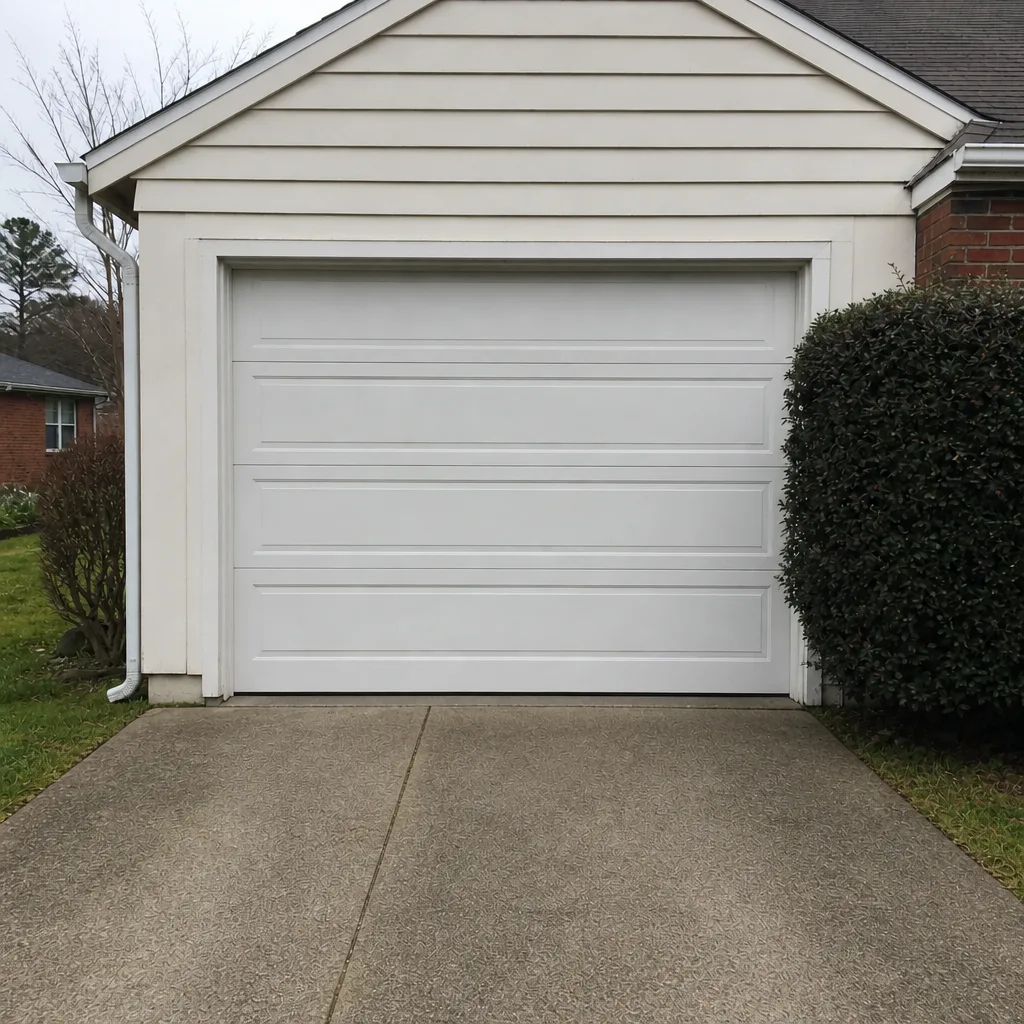 After
When to Call a Professional
Some seasonal maintenance is homeowner work: clean the photo-eyes, wipe down the tracks, look for rust, test the reverse function. But some problems need a professional, and calling is the right move in these cases.
Call a professional if the spring has snapped or is visibly pitted, if a cable is frayed or hanging loose, if the door is out of balance and pulling hard, if the opener is reversing unexpectedly after a force check, or if the door won’t open or close at all. Springs and cables under tension are hazardous, and adjusting them without the right tools is a way to get hurt.
Crescent Garage Door Repair offers free estimates in Winston-Salem if you want a professional to look at the door before the next season. Call (877) 692-2814 to schedule. We handle the full system, from the opener motor to the bottom seal, and we work on the brand you already have.
Frequently Asked Questions
Once per season, or at minimum twice a year (spring and fall) for a professional service. Winston-Salem’s four distinct seasons each stress a different part of the door, so four small seasonal checks catch more than one big annual one. If your door is more than 10 years old or gets heavy daily use, the light checkups pay off.
Pollen on the photo-eye lenses is the most common cause. Clean both the small sensors at the bottom of the tracks with a dry cloth. If the door still reverses, the photo-eyes may be misaligned or the safety reverse setting may be out of adjustment. Call (877) 692-2814 for an exact diagnosis. Estimates are free.
Yes, but only with a proper garage door lubricant (not WD-40). Apply it to the torsion spring coils before summer humidity sets in, typically in May. The lubricant displaces moisture and slows rust. Avoid spraying any part of the spring where the door connects. Call (877) 692-2814 if the spring is visibly rusted or pitted.
Cold stiffens the grease, the door feels heavier to the opener, and the cables take extra load. A cable that’s already worn will snap within about 48 hours of the first hard freeze. If a cable looks worn or frayed, don’t adjust it yourself. Call (877) 692-2814. We answer 24/7.
Yes, we repair both. We work on the major opener brands used in Winston-Salem, including LiftMaster, Chamberlain, Genie, and Craftsman. If your opener is older and the board has failed, we’ll tell you honestly what’s worth repairing and what isn’t. Call (877) 692-2814 for an exact quote.
No. The estimate we give before any work starts is the price you pay. We don’t surprise homeowners with a bigger bill after the job. For an exact quote on Winston-Salem garage door repair or service, call (877) 692-2814. Estimates are free.
A standard T-style or U-style weatherseal is what most doors use, and the right size for your door matters more than the profile. An oversized seal won’t seal, and an undersized one will pull away in cold. If you’re not sure what size your door takes, call (877) 692-2814 and we’ll check before the first cold snap.
The Bottom Line
Seasonal garage door care in Winston-Salem comes down to four short checkups a year, timed to the four weather shifts that actually stress a door. Clean the photo-eyes in spring and check for pollen buildup. Lubricate the springs before summer humidity sets in. Test the bottom seal before the first freeze. Re-check the opener force setting in January. Do the 15-minute walk-around and you’ll catch most of the conditions that lead to a cable snap or a stuck door. When something needs a professional, that’s what we do. Our technicians have up to experience, and we handle the full system. From a Crescent Garage Door Repair standpoint, we’d rather help you prevent a breakdown than repair one. For service in the Winston-Salem area, call (877) 692-2814 for a free estimate. We answer 24/7. Fast dispatch from 7am to 7pm, Sunday through Friday.
Written by the team at Crescent Garage Door Repair.